
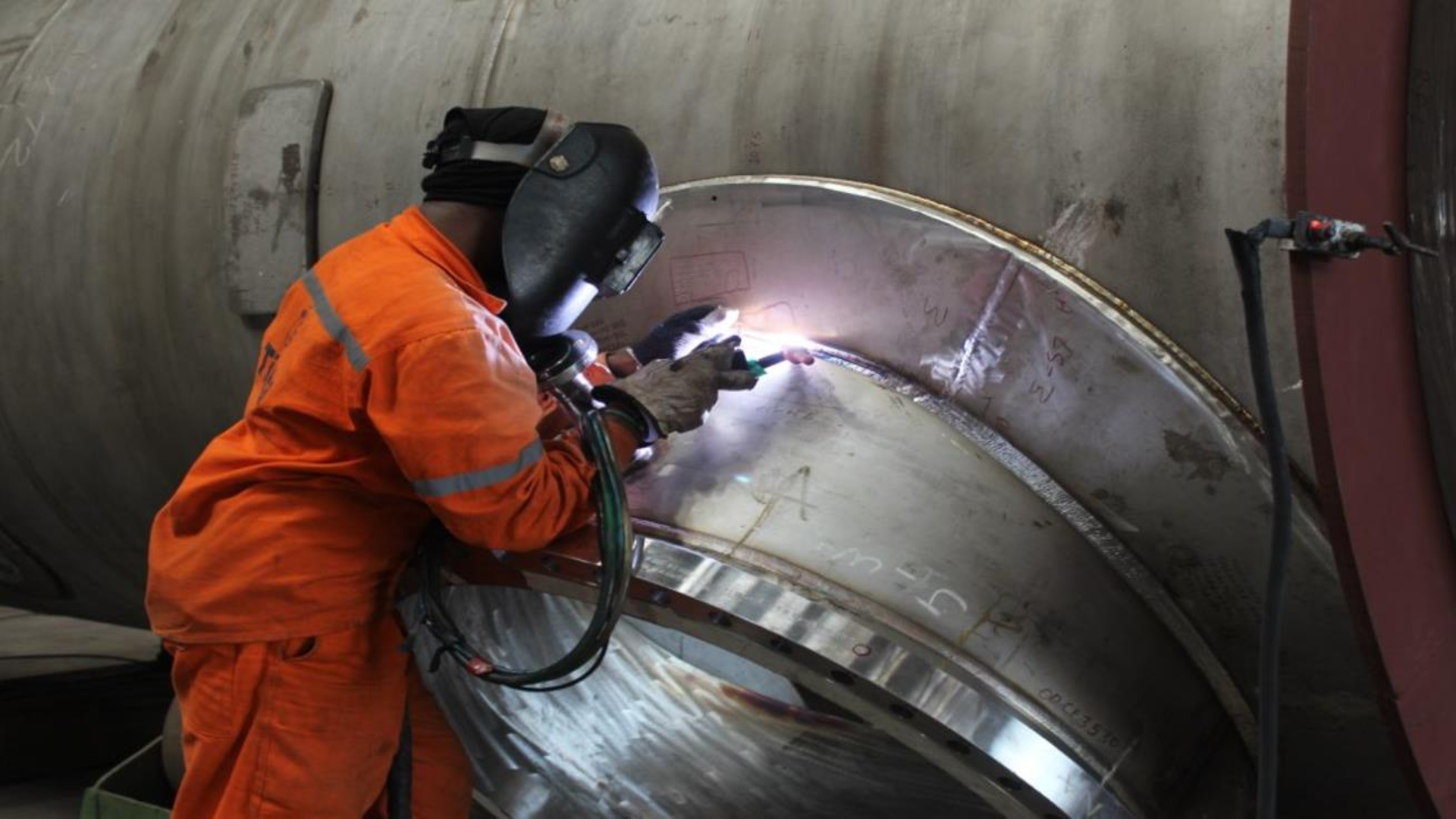
In demanding chemical and process industries, heat exchanger performance depends on more than thermal efficiency. Material selection, corrosion resistance, pressure-boundary integrity, fabrication quality and long-term service conditions are equally important. When conventional carbon steel or stainless steel construction is not adequate for the process environment, engineers may evaluate specialized materials such as Titanium, Zirconium, Tantalum and Nickel Alloys. Heat exchangers manufactured from these materials are commonly described as reactive metal heat exchangers or corrosion-resistant alloy heat exchangers.
A reactive metal heat exchanger is engineered for applications where the process fluid, operating temperature, concentration, contaminants or other service conditions demand a higher level of corrosion resistance than conventional construction materials can provide. Depending on the equipment specification, the corrosion-resistant material may form the complete pressure boundary or may be incorporated selectively through lined or clad construction. Current industry offerings demonstrate the use of Titanium, Zirconium, Tantalum and high-nickel alloys for highly corrosive chemical-process services.
For a static process equipment manufacturer, the important question is therefore not simply, “Which metal is the most corrosion resistant?” The engineering question is more precise: Which metallurgy, heat exchanger configuration and fabrication method provide the required thermal, mechanical and corrosion performance for the specified process conditions? That decision requires an understanding of process chemistry, heat-transfer requirements, pressure and temperature, differential thermal expansion, welding, inspection and expected service life.
This article examines the engineering considerations behind reactive metal heat exchangers, including Titanium, Tantalum, Zirconium, Nickel Alloys, Duplex & Super Duplex and Clad Metals, together with the fabrication practices required for demanding static process equipment.
What Is a Reactive Metal Heat Exchanger?
A reactive metal heat exchanger is a heat-transfer equipment designed using corrosion-resistant reactive metals or high-performance alloys for process services where the metallurgy is a critical part of equipment reliability. The term “reactive metal” is commonly associated with materials such as Titanium, Zirconium and Tantalum, while industrial suppliers also group high-nickel alloys with these materials when discussing corrosion-resistant process equipment.
The basic heat-transfer function remains the same as that of a conventional heat exchanger. One process stream transfers heat to or receives heat from another stream through a separating surface. What changes is the engineering approach to the materials of construction. The tubes, shell, tubesheets, channels or other process-contact surfaces may require specialized metallurgy because the process fluid can be chemically aggressive.
In many industrial applications, shell-and-tube construction is selected because it provides flexibility in process configuration, maintenance and mechanical design. The Tubular Exchanger Manufacturers Association, or TEMA, identifies shell-and-tube heat exchanger mechanical design as its core area of standardization, with its current 11th Edition covering exchanger selection, inspection, tube-to-tubesheet joints, clad and overlay construction, installation and other design considerations.
The reactive metal may be used as solid construction, a lining, a clad layer or another engineered arrangement. The appropriate construction depends on the process requirements, material availability, mechanical design and fabrication feasibility. Therefore, reactive metal heat exchanger fabrication should begin with a complete understanding of the equipment specification rather than with material selection in isolation.
Why Reactive Metals Are Selected for Heat Transfer Equipment
The principal reason for selecting reactive metals is usually corrosion resistance under defined process conditions. However, corrosion resistance is only one part of the selection process. Thermal conductivity, strength at operating temperature, weldability, thermal expansion, fabrication limitations, availability and lifecycle cost can also influence the final material decision.
For example, Titanium may be considered for applications where excellent corrosion resistance and suitable mechanical properties are required. Zirconium may be selected for particular aggressive chemical environments. Tantalum can be considered where exceptionally demanding corrosion conditions justify its use. Nickel-based alloys such as Hastelloy, Inconel and Monel are selected according to the chemistry, temperature and mechanical requirements of the service.
The engineering objective is therefore to select a material that provides an appropriate balance between corrosion resistance, mechanical integrity, heat-transfer performance, manufacturability and lifecycle economics.
Why Are Reactive Metal Heat Exchangers Used?
A conventional heat exchanger may perform effectively for years when its materials are correctly matched to the process. The situation changes when the process contains aggressive acids, chlorides, oxidizing environments, high temperatures, concentrated chemicals or contaminants that significantly affect corrosion behavior. In such services, premature corrosion can result in tube failure, leakage, contamination between process streams, loss of heat-transfer performance and unplanned maintenance.
A reactive metal heat exchanger is considered when the metallurgy needs to provide a higher level of resistance to the actual process environment. The material is selected based on the complete operating envelope rather than simply on the name of the chemical. Temperature, concentration, velocity, impurities and combinations of chemicals can significantly influence corrosion behavior. A material that performs well in one process may not be appropriate in another process using the same chemical at a different concentration or temperature.
This is why experienced reactive metal heat exchanger manufacturers do not approach material selection as a simple catalogue exercise. The process data, mechanical design conditions and fabrication requirements need to be reviewed together.
For shell-and-tube equipment, the design specification typically includes process fluids, flow rates, inlet and outlet temperatures, pressures, heat-transfer requirements, allowable pressure drop, fouling resistance, design pressure, design temperature, materials and other construction details. TEMA’s specification sheet reflects this integrated approach, including fields for design/test pressure, design temperature, tube and shell materials, tube-to-tubesheet joint, expansion joint and code requirements.
The result is a heat exchanger designed around the actual process service, rather than a generic exchanger selected only by size.
Materials Used in Reactive Metal Heat Exchangers
Material selection is one of the most important decisions in the design of a reactive metal heat exchanger. The term “exotic metal” covers a broad range of materials with different corrosion, mechanical and fabrication characteristics. The correct material therefore depends on the process conditions and the required equipment configuration.
Tinita Engineering’s exotic-metal fabrication capability encompasses Titanium, Tantalum, Zirconium, Nickel Alloys, Duplex & Super Duplex and Clad Metals, allowing material selection to be considered alongside the fabrication requirements of the static process equipment.
Titanium Heat Exchangers
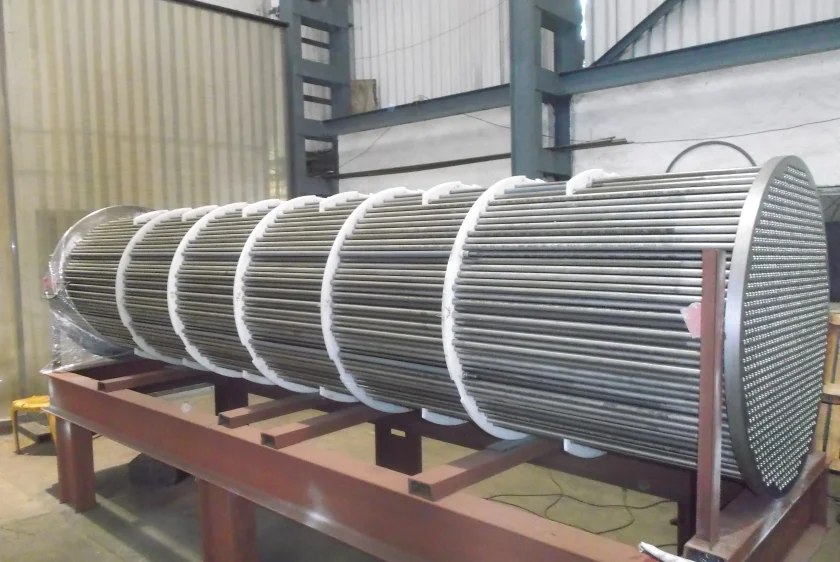
Titanium heat exchangers are widely associated with corrosion-resistant process applications where Titanium provides a suitable combination of corrosion resistance, mechanical properties and service performance. Titanium is particularly relevant to applications involving aqueous environments and selected chloride-containing services, although suitability must always be established against the actual process conditions.
Titanium Grade 2 is one of the commercially important grades used in industrial equipment. The material’s characteristics make it attractive for certain heat-transfer surfaces, condensers and process equipment where corrosion resistance is a major design requirement.
Fabrication of Titanium requires appropriate control of cleanliness, shielding and welding conditions. The objective is to prevent contamination during fabrication and maintain the specified properties of the material and welded joints.
For a manufacturer, Titanium fabrication therefore involves more than cutting and welding plate or tube. Material traceability, controlled fabrication practices, welding procedures, dimensional accuracy and inspection all contribute to the integrity of the finished heat exchanger.
Zirconium Heat Exchangers
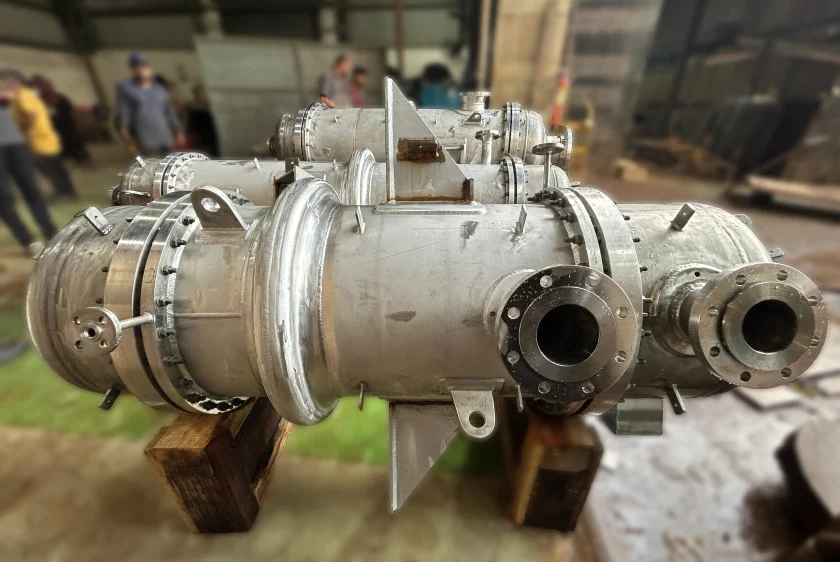
Zirconium heat exchangers are used for selected highly corrosive chemical services where Zirconium provides a suitable corrosion-resistant solution. Zirconium has a strong position in specialized chemical process equipment, but its use must be based on actual process chemistry rather than a generic statement that it is “corrosion resistant.”
The process concentration, temperature, contaminants and chemical environment need to be evaluated before finalizing the metallurgy. This is particularly important because corrosion behavior can change significantly with operating conditions.
Zirconium fabrication also requires specialized control of welding and contamination. The material’s value in demanding chemical equipment is therefore closely connected to the manufacturer’s ability to control the fabrication process.
A reactive metal heat exchanger manufacturer with experience in Zirconium must understand not only the material itself but also how the selected material interacts with the proposed equipment geometry, welding arrangement and inspection requirements.
Tantalum Heat Exchangers
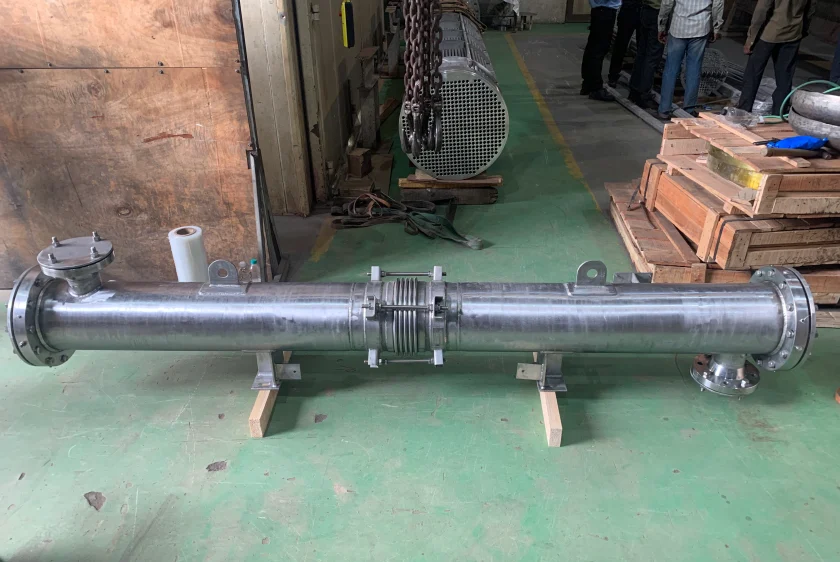
Tantalum heat exchangers occupy a specialized position within corrosion-resistant process equipment. Tantalum is recognized for exceptional corrosion resistance in a range of aggressive chemical environments, which makes it suitable for selected high-value applications where the process conditions justify the material cost.
Because Tantalum is a premium material, its use is generally targeted rather than indiscriminate. Engineers may consider Tantalum for process-contact surfaces or specialized components where conventional alloys cannot provide the required corrosion performance.
Tantalum fabrication requires particularly careful control of contamination and welding conditions. The material’s elevated-temperature behavior means that shielding and fabrication discipline are critical to maintaining weld quality.
For this reason, Tantalum fabrication is an engineering specialty rather than a conventional fabrication activity. The equipment manufacturer needs suitable procedures, trained personnel, material controls and inspection practices.
Nickel Alloy Heat Exchangers
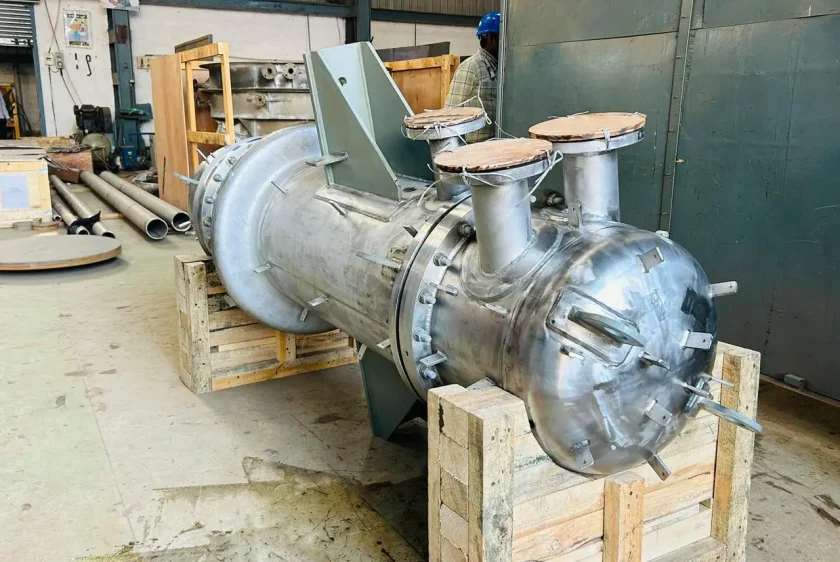
Nickel Alloys provide a broad family of corrosion- and temperature-resistant materials for demanding process equipment. Depending on the application, engineers may consider alloys such as Hastelloy, Inconel and Monel, along with other nickel-based alloys.
The advantage of Nickel Alloys is not that every grade performs identically. Each alloy has its own chemical, mechanical and temperature characteristics. The selection therefore needs to be based on the actual process environment and the required combination of corrosion resistance and mechanical performance.
Nickel Alloy heat exchangers are particularly relevant to chemical, petrochemical and other process applications where conventional stainless steels may not provide adequate performance.
Reactive Metal Heat Exchanger Designs
The metallurgy is only one part of the equipment design. The heat exchanger configuration must also be selected according to the thermal duty, process conditions, maintenance requirements and mechanical constraints.
Shell and Tube Heat Exchangers
The shell-and-tube heat exchanger remains one of the most versatile configurations for industrial process service. It can be engineered in several arrangements depending on the required heat-transfer duty, temperature program, pressure and maintenance philosophy.
For reactive-metal service, the construction may involve corrosion-resistant tubes, tubesheets, shell-side components or clad construction. The exact arrangement is determined by the equipment specification.
TEMA’s current standards include guidance on exchanger type selection, mechanical design, inspection and tube-to-tubesheet joints, making TEMA a key reference for engineers involved in shell-and-tube exchanger design and fabrication.
Fixed Tube Sheet Heat Exchangers
A fixed tube sheet heat exchanger provides a relatively straightforward construction arrangement, but differential thermal expansion must be evaluated where shell and tube-side temperatures differ significantly.
The design may be appropriate where operating conditions and cleaning requirements permit this configuration. Where thermal expansion becomes significant, the engineering team may need to consider other exchanger arrangements or a dedicated expansion solution.
U-Tube Heat Exchangers
A U-tube heat exchanger allows the tubes to expand independently within the shell to a greater extent than a fixed-tubesheet arrangement. This can be advantageous for services involving substantial temperature differences.
The U-tube arrangement can also influence cleaning and maintenance considerations, particularly on the tube-side surface.
Floating Head Heat Exchangers
A floating-head heat exchanger provides a configuration that accommodates differential expansion and can offer advantages for maintenance and bundle removal.
The final selection depends on process conditions, mechanical requirements, accessibility, cleaning requirements and project specifications.
Specialty Heat Exchanger Configurations
Reactive metal equipment is not restricted to one configuration. Depending on the process, manufacturers may engineer bayonet, immersion-coil, pipe-in-pipe, hairpin and other specialty heat-transfer arrangements.
The correct configuration should therefore be selected from the process duty rather than from material availability alone.
Key Design Considerations for Reactive Metal Heat Exchangers
A reliable reactive metal heat exchanger starts with a well-defined design basis. The process data should establish the thermal duty, fluid properties, design pressures, design temperatures, allowable pressure drops, fouling considerations and operating cases.
Process Chemistry
The complete chemical composition of the process fluid should be considered. Concentration, contaminants, dissolved gases and impurities can influence corrosion behavior.
Design Temperature and Pressure
The selected material and equipment construction must be suitable for the specified design pressure and temperature, including relevant operating and upset cases.
Differential Thermal Expansion
Shell and tube-side components can experience different temperatures and therefore different thermal expansion. The exchanger configuration and expansion management approach should account for this movement.
Heat-Transfer Performance
Material selection can influence heat-transfer performance through thermal conductivity and wall thickness. The design should therefore balance corrosion resistance with the required thermal duty.
Tube-to-Tubesheet Joint
The tube-to-tubesheet connection is a critical area of a shell-and-tube heat exchanger. Its design and fabrication should be compatible with the selected materials and service conditions. TEMA’s current standards specifically include more detailed discussion of tube-to-tubesheet joints.
Thermal Cycling
Equipment exposed to repeated startup, shutdown or process-temperature changes may experience cyclic stresses. The expected number and severity of cycles should therefore be considered during design.
Inspection and Testing
Inspection requirements should be established according to the applicable code, project specification and service criticality. Depending on the equipment and specification, this may include visual examination, dimensional inspection, liquid penetrant testing, radiography, ultrasonic examination, leak testing and other applicable methods.
Reactive Metal Fabrication: What Makes It Different?
Reactive metal fabrication requires greater process control than many conventional fabrication activities because the metallurgy itself can be sensitive to contamination, heat input and fabrication conditions.
The fabrication sequence may involve plate or tube preparation, forming, machining, fit-up, welding, inspection, dimensional verification and final testing. Each operation must be considered in relation to the selected material and equipment specification.
For Titanium, Zirconium and Tantalum, control of the welding environment and shielding is particularly important. High-temperature exposure to atmospheric contaminants can adversely affect reactive metals and their welds. This makes proper shielding, cleanliness and welding procedure control essential aspects of fabrication.
The manufacturer’s responsibility therefore extends beyond producing the required dimensions. The finished equipment must maintain the required metallurgical integrity, pressure-boundary integrity and corrosion performance.
Material traceability is another important consideration. Heat numbers, material certificates, welding consumables, fabrication records and inspection documentation should be controlled according to the project quality requirements.
This is why customers evaluating reactive metal heat exchanger manufacturers should examine fabrication capability and quality systems alongside equipment design capability.
Reactive Metal Welding and Fabrication Challenges
Welding is one of the most important aspects of reactive metal fabrication.
Titanium, Zirconium and Tantalum can require stringent shielding and cleanliness because the molten and high-temperature metal can react with atmospheric gases. The welding process therefore needs appropriate shielding arrangements, controlled preparation and qualified procedures.
Nickel Alloys have a different set of fabrication considerations. Alloy chemistry, heat input, distortion, cracking susceptibility and weldability can vary considerably from one grade to another. Welding procedures must therefore be developed and qualified for the specific material and joint requirements.
For Duplex and Super Duplex Stainless Steels, welding control is particularly important because the thermal cycle can influence the balance of ferrite and austenite and therefore the resulting properties of the weld and heat-affected zone.
This demonstrates why the phrase exotic metal fabrication should not be treated simply as a marketing category. Each metallurgy presents its own engineering and manufacturing requirements.
Exotic Metal Fabrication for Static Process Equipment
Exotic metal fabrication is an important capability for static process equipment manufacturers working with demanding chemical and industrial applications.
At Tinita Engineering, the material spectrum includes:
| Metallurgy | Typical Engineering Consideration |
|---|---|
| Titanium | Corrosion resistance, aqueous/chloride environments, controlled welding |
| Tantalum | Exceptional corrosion resistance for selected aggressive chemical services |
| Zirconium | Specialized corrosion resistance for selected chemical processes |
| Nickel Alloys | Corrosion and temperature resistance across demanding process services |
| Duplex Stainless Steel | High strength and corrosion resistance |
| Super Duplex Stainless Steel | Higher corrosion resistance and strength for demanding environments |
| Clad Metals | Corrosion-resistant surface combined with structural base material |
The advantage of a broad metallurgy capability is that equipment can be engineered around the process requirement rather than a single preferred material.
For example, a process may require Titanium for tubes, a different alloy for selected components, or a clad construction to achieve the required corrosion resistance while maintaining structural efficiency. The appropriate solution depends on the process chemistry, mechanical design and fabrication strategy.
Clad Construction for Reactive Metal Heat Exchangers
Clad Metals can provide an engineered solution where corrosion resistance is required on the process-contact surface while the structural portion of the equipment is manufactured from another material.
Clad construction can be particularly useful when the corrosion-resistant alloy has a significantly higher material cost than the structural base metal. Instead of manufacturing the complete pressure boundary from the premium alloy, the corrosion-resistant metallurgy can be selectively incorporated where the process requires it.
Depending on the design and specification, clad construction may involve explosion bonding, roll bonding or weld overlay. The choice depends on the equipment geometry, metallurgy, required bond characteristics and project requirements.
TEMA’s current 11th Edition explicitly includes an appendix addressing clad and overlay construction, demonstrating the relevance of these technologies to modern shell-and-tube heat exchanger engineering.
For reactive metal equipment, clad construction may be considered for components such as tubesheets, shells, heads and other process-contact surfaces. It should be designed and fabricated as an engineered material system, with appropriate attention to bonding, welding, inspection and final dimensional requirements.
This also creates an important connection between reactive metal fabrication and corrosion-resistant overlay technologies. In demanding process equipment, the objective is not simply to add a layer of expensive material; it is to create a reliable corrosion-resistant pressure boundary that remains fit for service.
Corrosion Considerations in Reactive Metal Heat Exchangers
Material selection should always begin with the actual process conditions.
A statement such as “Titanium is corrosion resistant” is not sufficient engineering justification for selecting Titanium. Similarly, Zirconium, Tantalum and Nickel Alloys should not be selected solely because they are categorized as exotic or reactive metals.
Engineers should evaluate:
- Chemical composition
- Chemical concentration
- Operating temperature
- Design temperature
- Pressure
- Flow velocity
- Chloride content
- Fluoride exposure
- Oxidizing or reducing conditions
- Contaminants
- Erosion potential
- Thermal cycling
- Cleaning chemicals
- Expected equipment life
The result should be a material-selection decision supported by appropriate technical data and process knowledge.
For critical chemical equipment, corrosion engineering and mechanical design should therefore work together. The material must survive the chemical environment while the equipment must maintain its pressure boundary, thermal performance and mechanical integrity.
Applications of Reactive Metal Heat Exchangers
Reactive metal heat exchangers are particularly relevant to industries where process chemistry places demanding requirements on materials of construction.
Chemical Processing
Chemical manufacturing can involve acids, alkalis, chlorides, oxidizing environments and other aggressive media. Reactive metals and high-performance alloys may be selected where conventional materials cannot provide the required corrosion resistance.
Petrochemical and Oil & Gas
Heat-transfer equipment in petrochemical processes can experience elevated temperatures, pressure and corrosive process streams. Material selection must account for the complete service environment.
Fertilizer
Fertilizer production includes demanding chemical environments where corrosion-resistant equipment can be important for process reliability and maintenance planning.
Specialty Chemicals
Specialty chemical processes can involve concentrated or highly specific chemistries where material compatibility becomes a critical equipment-design consideration.
Pharmaceutical and API Manufacturing
Process purity and contamination control can make metallurgy, surface condition and fabrication quality particularly important. Reactive metals may be considered for selected corrosive process services.
Pulp & Paper
Certain process streams can contain corrosive chemicals and elevated temperatures, creating applications for corrosion-resistant heat-transfer equipment.
Power and Energy
Condensers, coolers and other heat-transfer equipment can encounter challenging water chemistry, chlorides and temperature conditions. Material selection must be based on the specific service.
Industry manufacturers currently identify chemical, petrochemical, pharmaceutical and related process industries among the principal applications for reactive-metal heat exchangers.
Reactive Metal Heat Exchanger vs Conventional Heat Exchanger
The difference between a conventional and reactive metal heat exchanger is primarily the materials strategy and resulting fabrication requirements, not the basic principle of heat transfer.
| Parameter | Conventional Construction | Reactive Metal Construction |
|---|---|---|
| Material | Carbon steel, stainless steel and standard alloys | Titanium, Zirconium, Tantalum, Nickel Alloys and other specialized materials |
| Corrosion service | Suitable for defined process conditions | Selected for more demanding corrosion environments |
| Fabrication | Established conventional fabrication | Specialized metallurgy and fabrication controls |
| Material cost | Generally lower | Often higher |
| Welding requirements | Depends on material | Often requires specialized procedures and controls |
| Inspection | Project/code dependent | May require additional material-specific controls |
| Lifecycle consideration | Depends on corrosion rate | Can provide long service life when correctly selected |
| Clad construction | Possible | Frequently relevant for premium corrosion-resistant materials |
The important engineering principle is that reactive metal construction is not automatically superior for every application. A conventional material may be the technically and economically correct choice when it satisfies the process requirements.
The correct selection is the one that provides the required performance over the intended service life.
How to Select Reactive Metal Heat Exchanger Manufacturers
Selecting a reactive metal heat exchanger manufacturer requires more than checking whether the company lists Titanium or Zirconium on its website.
A technically capable manufacturer should be evaluated across several areas.
Metallurgy Experience
Does the manufacturer have practical fabrication experience with the specified material rather than simply sourcing it?
Engineering Capability
Can the manufacturer address both thermal and mechanical aspects of the equipment?
Fabrication Infrastructure
Does the facility have suitable forming, machining, welding and handling capabilities for the selected metallurgy?
Welding Expertise
Are appropriate welding procedures and qualified personnel available for the materials and joint configurations involved?
Material Traceability
Can the manufacturer maintain traceability from raw material through fabrication and final documentation?
Inspection and Testing
Can the manufacturer execute the required inspection and testing program according to the applicable specification?
Code and Standard Compliance
Does the project require ASME, TEMA, PED, IBR, EIL or customer-specific requirements? The manufacturer’s experience should match the project requirements.
TEMA’s current standards emphasize mechanical design, inspection, tube-to-tubesheet joints, clad and overlay construction and installation/maintenance considerations. ASME also provides certification programs covering pressure-equipment activities and identifies Section VIII-related certification categories including U and U2 among its conformity-assessment programs.
Project Experience
Finally, customers should examine whether the manufacturer has successfully handled comparable metallurgy, equipment configuration, process service and project complexity.
The strongest manufacturer is not necessarily the one offering the lowest initial price. For critical process equipment, engineering competence, fabrication quality and lifecycle reliability should form part of the purchasing decision.
Tinita Engineering’s Reactive Metal & Exotic Metal Fabrication Capability
Tinita Engineering Pvt. Ltd. is a static process equipment manufacturer specializing in engineered equipment for demanding industrial applications. Its manufacturing portfolio includes Shell & Tube Heat Exchangers, Reactors, Columns, Pressure Vessels and Piping Spools, with fabrication capabilities covering a broad range of conventional and exotic metallurgies.
For reactive and corrosion-resistant process equipment, Tinita’s material capabilities include:
Titanium
Tantalum
Zirconium
Nickel Alloys
Duplex & Super Duplex
Clad Metals
This metallurgy capability is particularly relevant when the equipment specification requires a combination of corrosion resistance, mechanical strength, thermal performance and controlled fabrication.
The approach to reactive metal fabrication should begin with the service conditions and equipment specification. Material selection, equipment configuration, welding requirements, inspection and testing are then considered as interconnected parts of the manufacturing process.
For a shell-and-tube heat exchanger, this may involve evaluating tube material, tubesheet construction, shell material, tube-to-tubesheet joints, expansion requirements, corrosion-resistant surfaces and the applicable design code. TEMA’s specification framework itself includes these types of construction and design considerations, reinforcing the importance of treating the exchanger as an integrated mechanical system.
Tinita’s broader exotic metal fabrication capability also creates opportunities for engineered clad and corrosion-resistant constructions where the project requires a combination of premium metallurgy and structural material.
Engineering Approach to Reactive Metal Heat Exchanger Fabrication
A reliable reactive metal heat exchanger is the result of a controlled chain of engineering decisions.
Process conditions → Material selection → Thermal design → Mechanical design → Fabrication → Welding → Inspection → Testing → Final documentation
Breaking that chain at any stage can affect the performance of the finished equipment.
Material selection without understanding the process chemistry can result in an unsuitable metallurgy. A suitable material without appropriate welding control can compromise the pressure boundary. A well-designed exchanger without adequate inspection can introduce manufacturing risks that are difficult to identify after commissioning.
For this reason, reactive metal heat exchanger fabrication should be treated as an integrated engineering activity.
The manufacturer needs to understand not only how to fabricate the equipment, but why a particular material, joint configuration or construction method has been specified.
That is particularly important for Titanium, Tantalum and Zirconium, where fabrication controls can directly influence the performance of the finished equipment.
Final Thoughts
A reactive metal heat exchanger is not simply a conventional heat exchanger manufactured from a more expensive alloy. It is an engineered static process equipment solution in which metallurgy, process chemistry, thermal performance, mechanical integrity and fabrication technology must work together.
Titanium, Zirconium, Tantalum and Nickel Alloys can provide solutions for demanding corrosion environments when correctly selected for the specified process conditions. Duplex & Super Duplex Stainless Steels can provide a combination of strength and corrosion resistance for appropriate services, while Clad Metals can offer a practical approach when corrosion resistance is required on selected process-contact surfaces without constructing the complete pressure boundary from a premium alloy.
The choice of material should always be based on the actual service conditions rather than on a generic ranking of metals. Temperature, concentration, contaminants, pressure, flow velocity, thermal cycling, corrosion mechanisms and lifecycle requirements all need to be considered.
Equally important is the manufacturer’s fabrication capability. Reactive metal fabrication and exotic metal fabrication require specialized control of material traceability, cleanliness, forming, welding, inspection and testing. For critical process equipment, these capabilities can be as important as the initial material selection.
At Tinita Engineering Pvt. Ltd., the combination of static process equipment manufacturing and broad exotic-metal fabrication capability enables the engineering and fabrication of demanding equipment using Titanium, Tantalum, Zirconium, Nickel Alloys, Duplex & Super Duplex and Clad Metals. The objective is to develop equipment around the process requirement, applicable design standards and required service performance.
For engineers and project teams evaluating reactive metal heat exchanger manufacturers, the right question is ultimately not simply who can manufacture the equipment. It is who can understand the metallurgy, process conditions, design requirements and fabrication challenges well enough to deliver a pressure-boundary system engineered for its intended service.
Frequently Asked Questions
What is a reactive metal heat exchanger?
A reactive metal heat exchanger is heat-transfer equipment manufactured using corrosion-resistant reactive metals or high-performance alloys for process services where conventional construction materials may not provide the required corrosion resistance or service life. Commonly considered materials include Titanium, Zirconium, Tantalum and Nickel Alloys.
Which materials are used in reactive metal heat exchanger?
Common materials include Titanium, Zirconium, Tantalum and Nickel Alloys. Depending on the application, engineers may also consider Duplex & Super Duplex Stainless Steels and Clad Metals. Material selection should be based on process chemistry, temperature, pressure, concentration and other service conditions.
What is reactive metal fabrication?
Reactive metal fabrication refers to the controlled manufacturing of equipment and components using materials such as Titanium, Zirconium and Tantalum. It involves specialized material handling, cleanliness, forming, machining, welding, inspection and traceability requirements.
What is exotic metal fabrication?
Exotic metal fabrication involves manufacturing process equipment from specialized metals and alloys selected for demanding mechanical, thermal or corrosion-resistance requirements. At Tinita Engineering, this includes Titanium, Tantalum, Zirconium, Nickel Alloys, Duplex & Super Duplex and Clad Metals.
Are reactive metal heat exchangers always shell-and-tube type?
No. Shell-and-tube construction is widely used, but reactive-metal heat-transfer equipment can also be engineered in configurations such as U-tube, floating-head, bayonet, immersion-coil, pipe-in-pipe and other specialty arrangements, depending on the process and design requirements.
Why is Titanium used in heat exchangers?
Titanium can be selected for applications where its corrosion resistance and mechanical properties are suitable for the process environment. It is particularly relevant to selected aqueous and chloride-containing services, but the final selection should always be based on the actual process chemistry and operating conditions.
Why is Tantalum used in process heat exchangers?
Tantalum is considered for selected highly corrosive chemical environments because of its exceptional corrosion resistance. Because of its high material value and specialized fabrication requirements, it is generally used where its performance provides a clear engineering benefit.
Can reactive metal heat exchanger be manufactured using clad construction?
Yes. Depending on the equipment design, clad and overlay construction can be used to provide a corrosion-resistant process-contact surface while using a different structural material for the pressure boundary. Technologies may include explosion bonding and weld overlay, subject to the metallurgy, geometry and project specification. TEMA’s current standards include specific guidance on clad and overlay construction.



 English