
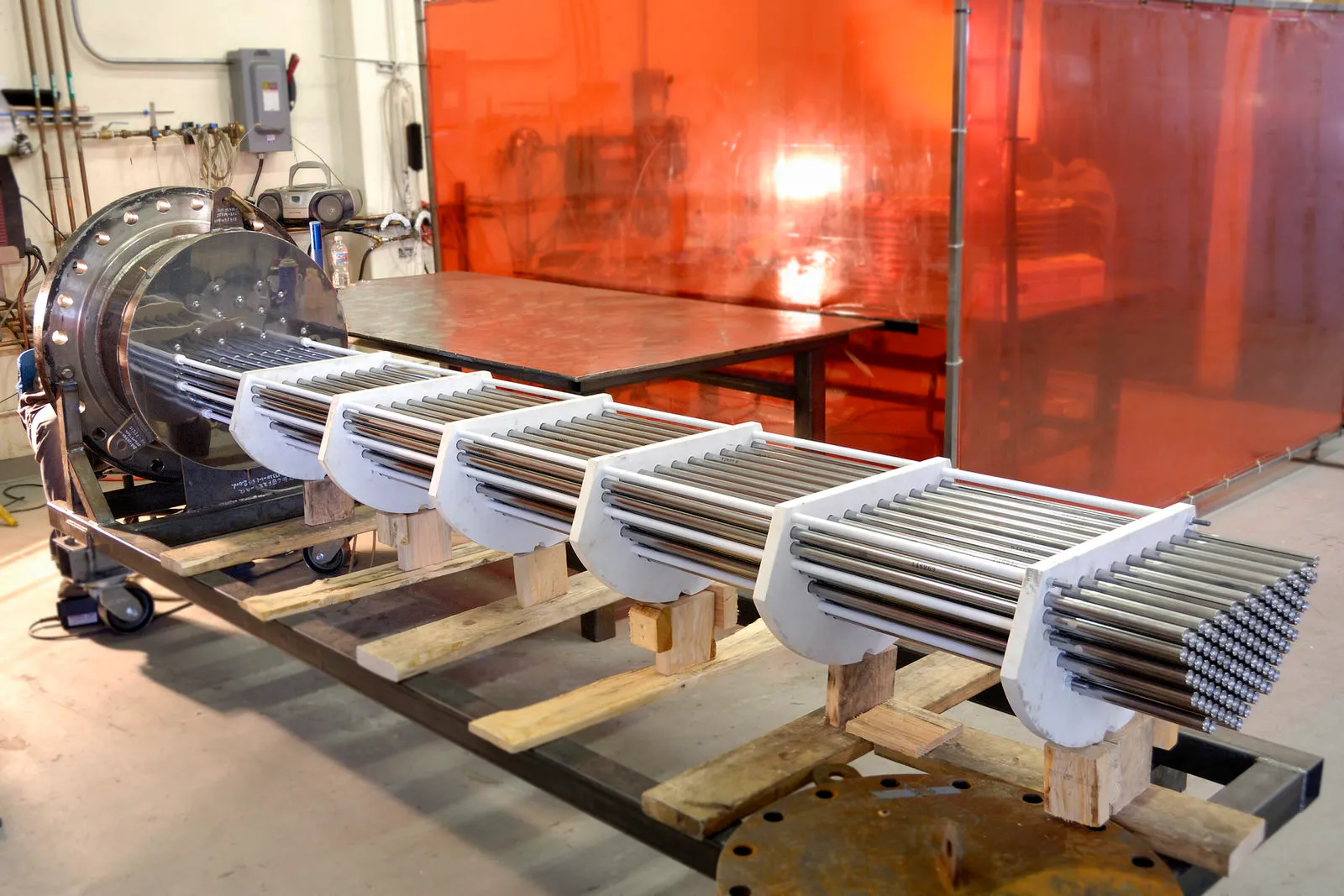
Heating a process fluid sounds straightforward until the operating environment becomes corrosive, temperature-sensitive or difficult to access. In industrial plants, the heating element must deliver controlled heat while remaining compatible with the process medium, tank geometry, operating temperature and maintenance requirements. This is where bayonet heaters provide a practical and engineered solution for a wide range of process-heating applications.
Unlike a conventional heating arrangement where the heating element may be permanently immersed in the process fluid, a bayonet configuration allows the heating element to be installed inside a protective tube or assembly. This arrangement can simplify maintenance and provide an additional barrier between the heating source and the process fluid. The configuration can be adapted for different tank arrangements, heating duties and process conditions.
At Tinita Engineering Pvt. Ltd., bayonet heaters are developed for industrial process applications where equipment reliability, material compatibility and controlled heat transfer are important. Our capabilities include bayonet immersion heaters, suction heaters and coolers, and Tantalum bayonet heaters, with specialized metallurgy for demanding chemical environments.
For particularly aggressive services, Tantalum bayonet heaters can provide a specialized corrosion-resistant solution. Tantalum’s exceptional corrosion resistance makes it relevant for selected chemical applications where conventional metallic materials may not provide the required service life.
This article explains what bayonet heaters are, how they work, where they are used, why Tantalum can be selected, and what engineers should consider when specifying a bayonet heater for an industrial process.
What Is a Bayonet Heater?
A bayonet heater is an industrial heating device designed to transfer heat to a process fluid, liquid or other medium through a tubular heating arrangement. The heating element is typically housed within a protective tube or bayonet assembly, allowing heat to pass through the tube wall into the process medium.
The name comes from the configuration of the heater assembly, where the heating element can be inserted into and removed from its protective housing. This basic arrangement can offer an important maintenance advantage: the heating element can potentially be serviced or replaced without requiring the entire process equipment to be dismantled.
In industrial applications, bayonet heaters may be installed vertically, horizontally or through the side of a tank depending on the process and equipment arrangement. The final configuration depends on factors such as tank dimensions, liquid level, available space, heating requirement, nozzle arrangement and maintenance access.
The heater is therefore not simply a heating element. It is an engineered component that must be designed around the process fluid, heat-transfer requirement, metallurgy, mechanical arrangement and operating conditions.
How Do Bayonet Heaters Work?
The operational principle of bayonet heaters is based on indirect heat transfer. The heating element generates heat inside the bayonet assembly, and that heat passes through the protective tube wall into the surrounding process fluid.
The process fluid does not normally come into direct contact with the electrical heating element. Instead, the heat travels from the internal heating source through the tube wall and into the process medium.
The actual heat-transfer mechanism depends on the process. Natural convection may circulate the heated liquid in a tank, while forced circulation or agitation can improve heat distribution. In some applications, the heater may be positioned strategically to maintain a required temperature or prevent localized cooling.
A simplified heat-transfer path can be represented as:
Heating element → Bayonet tube → Tube wall → Process fluid → Bulk fluid circulation
The engineering objective is to transfer the required amount of heat while keeping the heater surface within acceptable temperature limits.
This becomes especially important when the process fluid is corrosive or when overheating could degrade the product. Material selection, heater loading, fluid velocity and temperature control therefore need to be considered together.
Why Are Bayonet Heaters Used in Industrial Processes?
Industrial heating systems have to solve more than one problem at the same time. The equipment must provide the required heating duty while also fitting into the process plant, remaining maintainable and surviving the operating environment.
Bayonet immersion heaters can be useful because the heating assembly can be designed around the process vessel and its maintenance requirements.
Some important benefits include:
- Indirect heating of the process medium
- Removable heating elements in suitable configurations
- Compact installation
- Adaptability to tank-mounted applications
- Reduced need for external heating equipment
- Potentially easier maintenance
- Compatibility with specialized corrosion-resistant materials
- Application-specific heating configurations
The actual benefit depends on the equipment design and process conditions. A heater should never be selected only because it is compact or removable. The required heat duty, process chemistry, operating temperature, fluid characteristics and installation arrangement must all be evaluated.
For demanding chemical services, the material of construction can be just as important as the electrical heating specification.
Bayonet Immersion Heaters
Bayonet immersion heaters are designed for applications where heating is required directly within a tank, vessel or process container while maintaining separation between the heating element and process medium.
This arrangement can be useful when the process fluid needs to be heated without introducing a conventional external heat exchanger or steam coil.
The design can be adapted according to:
- Tank geometry
- Process fluid
- Heating capacity
- Operating temperature
- Immersion depth
- Available mounting location
- Required material of construction
- Maintenance requirements
For industrial applications, the heater assembly should be designed according to the actual process conditions rather than using a generic standard configuration.
Tantalum Bayonet Heaters for Corrosive Services
One of the most technically interesting applications is the use of Tantalum bayonet heaters in aggressive chemical environments.
Tantalum is known for its excellent resistance to many highly corrosive chemical environments. This makes it valuable in specialized process equipment where conventional stainless steels or other materials may have limitations.
However, choosing Tantalum should be based on actual process chemistry rather than simply labeling an application as “corrosive.” Concentration, temperature, impurities, flow conditions and the presence of other chemical species can all influence material performance.
A Tantalum bayonet heater can therefore be considered when the process requires a highly corrosion-resistant heat-transfer surface.
The construction may also involve a combination of materials rather than making every component from Tantalum. This can allow the process-contact area to receive the required corrosion resistance while the structural components use an appropriate supporting material.
This type of engineering requires experience in Tantalum fabrication, welding, lining, tubesheet construction and material control.
Tantalum Bayonet Immersion Heaters
Tantalum bayonet immersion heaters are specialized immersion-heating equipment designed for applications where the process environment demands high corrosion resistance.
The Tantalum component forms the critical process-contact barrier while the internal heating arrangement provides the required thermal energy.
For chemical-process applications, the Tantalum surface may be particularly valuable where conventional heater materials could experience unacceptable corrosion.
However, corrosion resistance is only one part of the design. The heater must also achieve the required heat-transfer rate, maintain mechanical integrity, accommodate thermal expansion and remain serviceable during operation.
This is why the design of a Tantalum heater should involve both thermal engineering and metallurgy.
Tantalum Bayonet Heater Tubesheet Lining
The tubesheet is a critical part of many heat-transfer and heater assemblies because it provides the structural connection between tubes and the equipment body.
In corrosive services, the tubesheet surface exposed to the process fluid may require specialized corrosion protection. Tantalum tubesheet lining can provide a corrosion-resistant process-contact surface while the underlying structural material provides the required mechanical strength.
This combination is an example of how exotic metal fabrication can be integrated into process equipment without necessarily constructing the entire equipment from a high-cost exotic alloy.
The design of the lining system needs to consider:
- Process chemistry
- Operating temperature
- Pressure
- Thermal expansion
- Attachment method
- Surface integrity
- Inspection requirements
- Compatibility between base material and lining
For severe chemical services, the integrity of the Tantalum lining and its attachment to the supporting structure is a critical engineering consideration.
Vertical Tantalum Bayonet Heaters
A vertical Tantalum bayonet heater is installed vertically within or alongside a process tank or vessel, depending on the equipment configuration.
Vertical installation can be useful where tank geometry, liquid level and available space make a top-mounted arrangement practical.
The design needs to ensure adequate immersion of the heating section under the minimum operating liquid level. Heater positioning also affects fluid circulation and heat distribution.
For a vertical arrangement, engineers should consider:
Immersion depth → Heat-transfer area → Fluid circulation → Tank geometry → Support arrangement → Maintenance access
The heater should not be positioned solely according to available nozzle space. Its location should support effective heating of the process medium while maintaining safe and reliable operation.
Tank Side Installed Tantalum Heaters
In some process applications, installing the heater through the side of a tank can be more practical than top entry.
Tank side installed tantalum heaters can be configured for applications where vessel access, process layout or maintenance requirements make side installation preferable.
The side-entry arrangement can provide flexibility in equipment layout and may be particularly useful for tanks with restricted top access or existing process connections.
However, the heater location needs to be coordinated with the liquid level, internal circulation pattern, tank nozzle arrangement and maintenance envelope.
A well-designed tank-side heater should provide the required heating performance without creating unnecessary interference with agitators, baffles, internal piping or other equipment.
Suction Heaters and Coolers
Not every tank application requires only heating. Some processes require controlled heating or cooling around a suction or outlet connection.
Suction heaters and coolers are designed for specialized tank and process applications where the thermal condition of the fluid near the suction point is important.
These systems can help maintain process temperature or provide thermal conditioning close to the outlet region.
Their design depends heavily on the tank arrangement, fluid properties, required heat-transfer duty and process-flow conditions.
Tinita Engineering offers customized Suction Heaters & Coolers as part of its bayonet-heater product portfolio.
Materials Used for Bayonet Heaters
Material selection is one of the first questions engineers should ask when specifying a bayonet heater.
The material must withstand the process environment while also maintaining adequate mechanical and thermal performance at the operating temperature.
Depending on the application, materials may include stainless steels, Nickel Alloys, Titanium, Tantalum, Zirconium or other specialized materials.
For aggressive chemical environments, Tantalum bayonet heaters may be considered when the process chemistry makes its corrosion resistance advantageous.
The right choice depends on:
- Chemical composition
- Acid or alkali concentration
- Operating temperature
- Process pressure
- Contaminants
- Corrosion mechanism
- Heating-surface temperature
- Required service life
Material selection should therefore be performed using actual process data and appropriate corrosion information.
Why Tantalum Is Used in Bayonet Heaters
The main reason for considering Tantalum is its exceptional corrosion resistance in specific chemical environments.
This characteristic can make Tantalum attractive for process heating equipment exposed to aggressive chemicals.
However, Tantalum is a specialized and relatively expensive material. Using it throughout an entire heater assembly may not always be the most economical engineering solution.
This is where Tantalum-lined or Tantalum-clad construction can become useful. The process-contact surface can incorporate Tantalum where corrosion resistance is needed, while other parts of the equipment can be manufactured from a structurally suitable base material.
The result can be a more technically and economically balanced construction.
For this reason, a manufacturer with experience in exotic metals, Tantalum fabrication and corrosion-resistant construction can add significant value during equipment selection.
Key Design Considerations for Bayonet Heaters
A reliable bayonet heater starts with a complete process specification.
Heat Duty
The required heat duty determines the heating capacity and heat-transfer surface required.
The design should consider the fluid mass, specific heat, initial temperature, target temperature, heating time and heat losses.
Process Fluid
Fluid viscosity, density, boiling point, corrosivity and thermal sensitivity can influence heater design.
A highly viscous fluid may require a different arrangement from a low-viscosity liquid because natural circulation and heat transfer behave differently.
Operating Temperature
The operating temperature of the process fluid must be established along with the maximum allowable heater-surface temperature.
This is particularly important for heat-sensitive materials or processes where localized overheating could cause degradation.
Heating Surface Loading
Excessive surface loading can create very high local temperatures. The appropriate heater loading depends on the process medium and heat-transfer conditions.
Installation Position
Top-entry, vertical and side-entry configurations each have different installation and maintenance considerations.
Material Compatibility
The process-contact material must be selected based on actual chemistry and temperature.
Maintenance
A removable bayonet configuration can provide an important maintenance advantage where the heating element needs periodic inspection or replacement.
Bayonet Heater Applications
Bayonet heaters can be designed for various industrial process applications where controlled heating of a liquid or process medium is required.
Potential applications include:
- Chemical process tanks
- Storage and process vessels
- Corrosive chemical tanks
- Acid-processing systems
- Industrial fluid tanks
- Process liquid heating
- Temperature maintenance systems
- Specialty chemical processing
- Tank-side heating systems
- Corrosion-sensitive heating applications
The suitability of a bayonet heater depends on the process. Each application should be evaluated based on fluid characteristics, heat duty, tank configuration and material compatibility.
For aggressive chemical services, Tantalum bayonet heaters can provide a specialized option where corrosion resistance is a major design requirement.
Bayonet Heaters vs Conventional Immersion Heaters
The choice between a conventional immersion heater and a bayonet configuration depends on the application.
| Feature | Bayonet Heaters | Conventional Immersion Heaters |
|---|---|---|
| Heating method | Indirect heating through protective tube/assembly | Typically direct immersion of heating element assembly |
| Maintenance | Can allow removable heater element configurations | Depends on design |
| Corrosive service | Can use specialized process-contact materials | Material selection is critical |
| Tantalum construction | Suitable for specialized applications | Possible depending on design |
| Tank installation | Flexible configurations | Depends on equipment |
| Customization | High for process applications | Varies by design |
| Process integration | Designed around vessel and process | Often standardized depending on application |
Neither arrangement is universally better. The appropriate equipment depends on the process requirements, maintenance philosophy and operating environment.
What Makes a Good Bayonet Heater Manufacturer?
Selecting a bayonet heater manufacturer should involve more than comparing heater wattage and price.
For industrial process applications, the manufacturer should understand:
Thermal design + Process chemistry + Metallurgy + Fabrication + Inspection + Installation
A manufacturer should be able to evaluate the process fluid, heating duty, installation configuration and material requirements together.
This becomes even more important for Tantalum bayonet heaters, where fabrication quality and material handling are critical.
Questions worth asking include:
- Does the manufacturer have experience with exotic metals?
- Can it manufacture Tantalum process-contact components?
- Can it provide customized dimensions?
- Can it manufacture tank-side and vertical configurations?
- Does it understand corrosive chemical services?
- Can it provide appropriate inspection documentation?
- Can it manufacture the tubesheet and lining arrangement?
- Can the heater be integrated with the customer’s vessel design?
These questions help separate a specialized industrial equipment manufacturer from a standard heating-element supplier.
Tinita Engineering’s Bayonet Heater Manufacturing Capability
At Tinita Engineering Pvt. Ltd., bayonet heaters are approached as customized process equipment rather than generic electrical heating products.
The engineering focus includes the interaction between heating duty, process chemistry, metallurgy, tank configuration and maintainability.
Our bayonet-heater portfolio includes:
- Bayonet Immersion Heaters
- Suction Heaters & Coolers
- Tantalum Bayonet Heaters
For demanding chemical services, Tinita’s broader expertise in exotic metal fabrication supports the development of specialized process-contact components in materials such as Tantalum.
The engineering approach is particularly relevant for EPC contractors, chemical manufacturers, process-plant operators and engineering organizations requiring customized heating equipment rather than standard catalog products.
Tantalum Bayonet Heaters for Sulfuric Acid Applications
sulfuric acid concentration tantalum bayonet heater services can involve challenging combinations of concentration and temperature. Material performance can change significantly with process conditions, meaning that the suitability of a material must be evaluated against the actual operating envelope.
A Tantalum process-contact surface may be considered in selected sulfuric acid applications because of its corrosion resistance.
However, the final heater design should be based on the customer’s exact:
- Acid concentration
- Operating temperature
- Design temperature
- Heating duty
- Tank dimensions
- Liquid level
- Process pressure
- Required heating rate
- Expected service life
Pressure equipment requirements should be evaluated according to the applicable design code and project specification. ASME BPVC Section VIII provides rules for pressure-vessel construction.
This is a good example of why process equipment engineering and metallurgy should be considered together.
Bayonet Heater Tube and Tubesheet Engineering
The tube and tubesheet arrangement is central to the mechanical integrity of a bayonet heater.
The tube must withstand the thermal environment and maintain its integrity throughout operation. The tubesheet must provide a reliable mechanical interface while maintaining the required process-contact protection.
Where Tantalum is used as a lining or corrosion-resistant surface, the engineering challenge becomes more specialized because the design must account for the relationship between the Tantalum layer and the supporting structure.
Thermal expansion also deserves attention. Different materials can respond differently to temperature changes, so the design must account for movement and thermal stresses.
This is where experience in Tantalum fabrication and specialized metallurgy becomes valuable.
Inspection and Quality Control
For equipment supplied to applicable European markets, the Pressure Equipment Directive (PED) requirements should be evaluated according to the equipment category, design conditions and conformity-assessment requirements.
A process heater should be inspected according to the applicable project specification and material requirements.
Typical quality activities can include:
- Material verification
- Dimensional inspection
- Visual inspection
- Weld inspection
- Non-destructive examination where specified
- Leak testing
- Electrical testing where applicable
- Surface inspection
- Tubesheet inspection
- Final dimensional verification
- Documentation review
For Tantalum components, material identification and surface integrity are particularly important.
The exact inspection plan should be established according to the heater design, customer specification, applicable standards and intended service.
Frequently Asked Questions About Bayonet Heaters
What is a bayonet heater?
A bayonet heater is an industrial heating device in which a heating element is housed within a tubular or bayonet assembly to transfer heat to a surrounding process medium. The configuration can be designed for tank and vessel applications.
What are bayonet immersion heaters used for?
Bayonet immersion heaters are used to heat process liquids in tanks and vessels. They can be customized according to heat duty, tank geometry, fluid properties, installation position and material requirements.
What are Tantalum bayonet heaters?
Tantalum bayonet heaters are specialized heaters incorporating Tantalum in the process-contact construction for selected corrosive chemical services where high corrosion resistance is required.
Why is Tantalum used in immersion heaters?
Tantalum is considered for certain immersion-heater applications because of its exceptional corrosion resistance in specific chemical environments. Its use should be determined from actual process chemistry and operating conditions.
What is a vertical Tantalum bayonet heater?
A vertical Tantalum bayonet heater is a vertically installed bayonet heating arrangement incorporating Tantalum for the process-contact surface or components. It can be designed for suitable tank and vessel configurations.
Can bayonet heaters be installed from the side of a tank?
Yes. Tank-side installed bayonet heaters can be designed for applications where side entry is preferred because of tank geometry, accessibility or process requirements.
Are bayonet heaters suitable for corrosive chemicals?
They can be, provided the heater’s process-contact materials are correctly selected for the actual chemical environment. Specialized materials such as Tantalum may be considered for demanding corrosive services.
Final Thoughts
Bayonet heaters are versatile industrial heating solutions that can be engineered around the requirements of tanks, vessels and process systems. Their indirect heating arrangement, installation flexibility and potential maintenance advantages make them suitable for a range of industrial applications.
The engineering becomes considerably more demanding when the process involves aggressive chemicals. In these situations, material selection is just as important as heat-transfer performance. Tantalum bayonet heaters can provide a specialized solution for selected corrosive services where exceptional corrosion resistance is required.
At Tinita Engineering, our approach combines process equipment manufacturing, exotic metal fabrication and application-specific engineering. Our bayonet heater portfolio includes bayonet immersion heaters, suction heaters and coolers, and Tantalum bayonet heaters, allowing the equipment configuration to be developed around the customer’s process requirements.
For a new application, the most useful starting point is not simply asking, “Which heater should we buy?” Instead, define the process fluid, heat duty, operating temperature, tank geometry, installation arrangement, metallurgy and maintenance requirements. Once these parameters are established, the appropriate bayonet-heater configuration can be engineered with much greater confidence.
For customized bayonet heaters and Tantalum bayonet heating solutions, Tinita Engineering Pvt. Ltd. can develop the equipment around your specific process requirements.



 English