
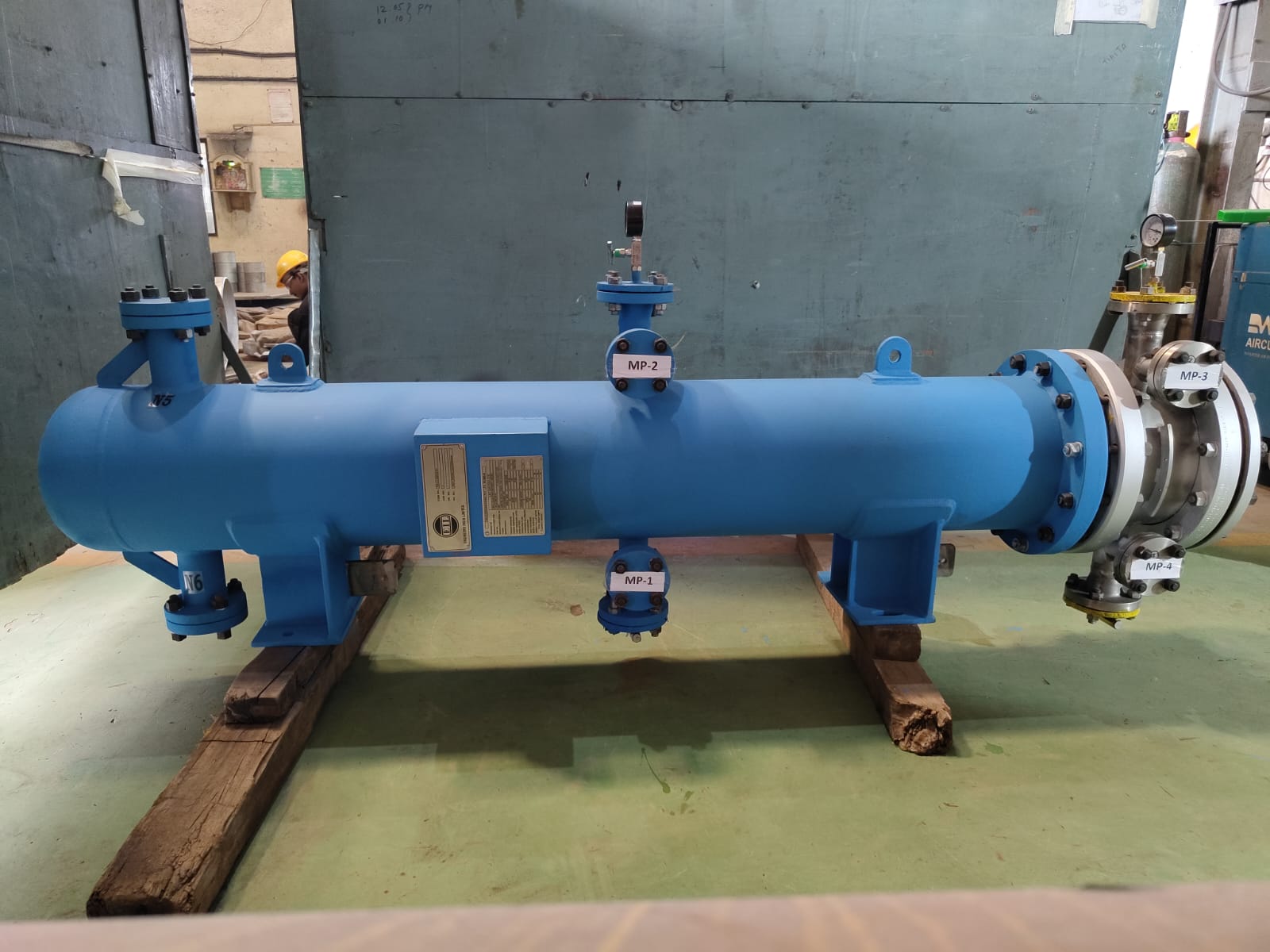
Sulfuric acid (H2SO4) is one of the most widely used industrial chemicals found in fertiliser production, metal refining, and chemical synthesis. The environments containing this acid are very aggressive and difficult to handle. Heat exchangers in such environments need materials that can stay stable and unreactive to corrosion, wear, and oxidation. This is when zirconium comes into consideration. Where other materials fail, zirconium forms a self-healing layer to protect itself from oxidation and corrosion. When this material is configured into a U-tube design, the properties get enhanced and make it a preferred choice for heat exchangers in sulfuric acid.
A corrosion-resistant heat exchanger in these services must withstand aggressive chemical attack without compromising thermal efficiency. Zirconium provides the solution by utilising a unique material property. It forms a self-healing, passive oxide layer immediately upon exposure to oxygen or moisture. This thin, tenacious layer results in a nearly zero corrosion rate in many aggressive media where other metals perish quickly.
Why Zirconium? The Role of a Zirconium Heat Exchanger Manufacturer
Zirconium grades like 702 and 705 are also called “reactive metals” due to their tightly adherent surface oxide films. Apart from this, the skills and experience of the zirconium heat exchanger manufacturer are also important. One needs to have a detailed knowledge when working with reactive metals like zirconium. Advanced welding skills are essential. When welding, it is especially important to purge argon correctly so that the molten metal doesn’t absorb gases from the air, which would make it weak and brittle. Also, cleanrooms are very important during the manufacturing process. Iron on the surface of zirconium can damage the protective oxide layer. Our Class 8 cleanroom at Tinita makes it possible to build these important parts in a controlled environment, which keeps the integrity of the materials.
Advantages of U-Tube Type Heat Exchanger
The structural design of the equipment is as important as the material in acid service environments. A U-tube heat exchanger has a bunch of tubes that are bent into a “U” shape and attached to a single stationary tube sheet. This setup lets the tubes expand and contract freely with temperature changes, without affecting the shell. This ability to handle different thermal expansion is very important in high-temperature refinery settings. It lowers the chance of stress-related tube failure at the tube-to-tubesheet joint, which is a common failure point in straight-tube designs.
Another important thing to consider is maintenance. The U-tube design makes maintenance easier than fixed tubesheet designs. You can take the whole tube bundle out of the shell to clean, inspect, or replace it. This easy access makes the overall lifecycle performance better in tough sulphuric acid applications.
Integration in the Feed Cracker: Heat Exchanger for Feed Cracking Process
In a refinery’s cracking circuit, the heat exchanger for the feed cracking process sits at a critical juncture. Its primary role is managing the immense heat load to ensure downstream stability of the process. The design must account for extreme temperature and pressure handling requirements along with complete material compatibility with specific sulphuric acid concentration levels. Engineers must optimise tube thickness, diameter, and bundle configuration within the shell to achieve the desired thermal performance without sacrificing safety factors. Operational reliability factors are paramount here because equipment failure can halt the entire cracking unit.
Why Zirconium U-Tube Heat Exchangers Are Critical for Feed Cracker Units
Zirconium U-tube heat exchangers are critical for feed cracker units for various reasons. They ensure safe acid handling to prevent leaks that could endanger personnel. They enhance process efficiency by maintaining optimal heat transfer rates over long periods, unlike materials that foul due to corrosion products. By resisting attack, they minimise equipment downtime associated with repairs. They provide long-term corrosion protection that other cost-saving alternatives cannot match, offering a better total cost of ownership.
Industries Using Zirconium Sulphuric Acid Heat Exchangers
Our zirconium heat exchangers for sulfuric acid are used in 4 main industrial applications:
Petrochemical Plants
The zirconium heat exchanger is mainly found in Sulfuric Acid Recovery (SAR), where sulfuric acid is used as a catalyst. They are also used in Methyl Methacrylate (MMA) Production, aramid fibre manufacturing, and hydrogen peroxide production.
Fertiliser Industry
The fertiliser industry uses this heat exchanger for sulfuric acid concentration and dilution, phosphoric acid production, and ammonium sulfate and nitric acid integration.
Chemical Processing Plants
In the chemical processing plants, this heat exchanger tube is mainly applied for sulfuric acid pickling, explosion clad equipment, chemical processing and production, and corrosive environment handling.
Tinita’s Expertise in Manufacturing Zirconium Equipment for Refinery Applications
At Tinita Engineering, we have spent over 18 years developing the necessary aptitude to manufacture high-grade zirconium equipment for refinery applications. We are a recognised Exotic Metal Heat Exchanger Supplier. Our capabilities extend beyond heat exchangers to include the fabrication of zirconium condensers and reactors. We use advanced welding, machining, and rigorous inspection techniques by third-party agencies to meet international standards like ASME “U”. Apart from the standard units, we also provide custom-built solutions tailored to the specific demands of refinery and petrochemical plants globally. Our major capital investment in expanding our plant in Dahej, equipped with new machinery, further strengthens our ability to deliver these complex, large-scale projects reliably to meet rising demand.


 English