
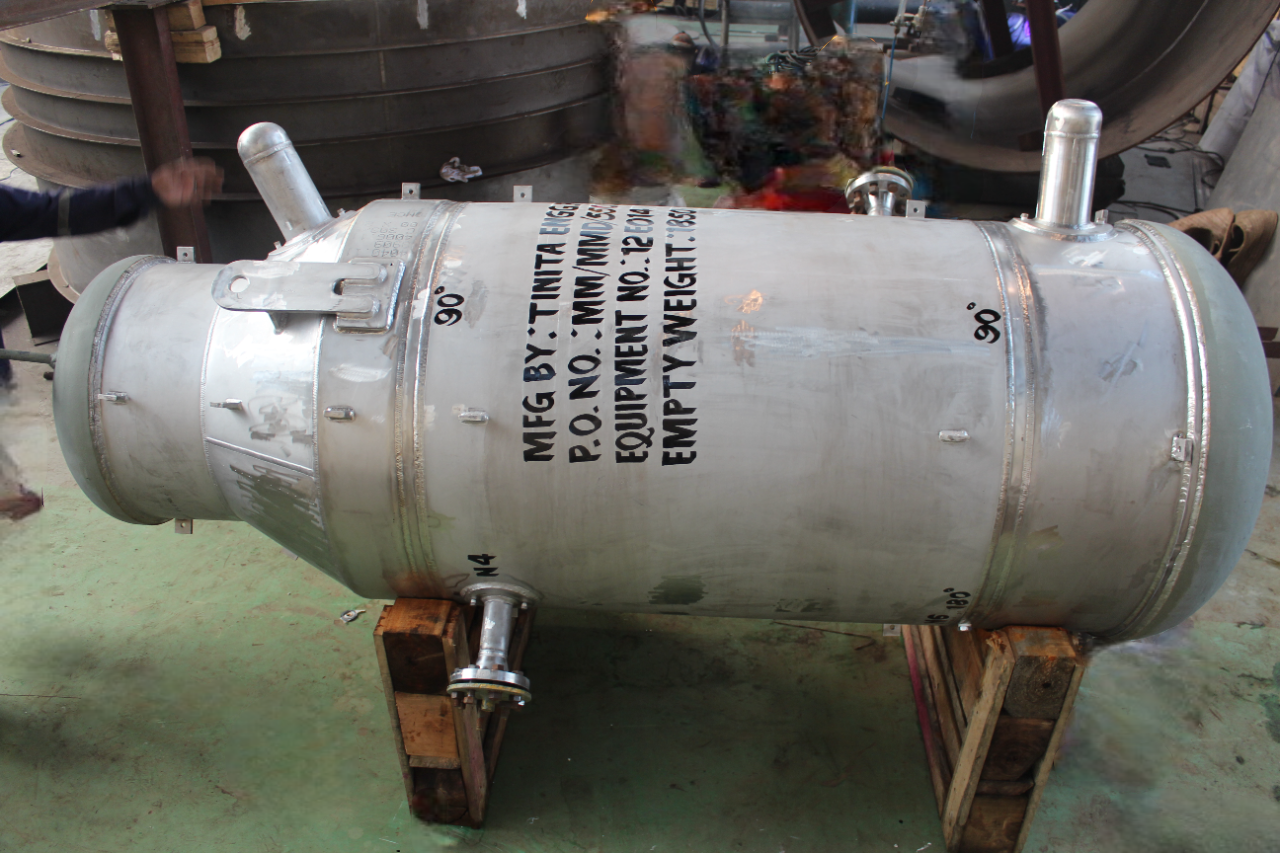
In modern nitric acid and fertiliser plants, the Boiler Feed Water (BFW) preheater helps in energy performance and steam cycle efficiency. It is a critical heat recovery component that captures high-temperature waste heat from ammonia oxidation gases and transfers it to the BFW. This reduces fuel demand and stabilises steam generation. The 2RE10 heat exchanger is specifically engineered for this application, combining efficient thermal design with the high corrosion resistance required for Weak Nitric Acid (WNA) service. In highly oxidising nitric acid environments where conventional stainless steels fail, 2RE10 provides the durability needed to maintain leak-free and long-term operation. As an experienced manufacturer and supplier, we at Tinita Engineering Pvt. Ltd. design 2RE10 BFW preheaters that deliver reliable heat recovery, structural integrity and sustained performance in demanding nitric acid and fertiliser applications.
What is a BFW Preheater and Why Is It Critical in Nitric Acid Plants?
A BFW Preheater is a specialised heat exchanger that increases the water temperature before it enters a boiler. It uses hot process gases or waste heat from process streams like flue gas, hot acid, or process effluent and transfers it to the incoming feed water. The boiler consumes less fuel to reach the latent heat of evaporation as the water’s temperature is already raised before it reaches there. This provides higher boiler efficiency and lower fuel consumption, allowing lower operation costs. A WNA plant operates at very high temperatures and releases hot process gases. Instead of letting this heat go to the atmosphere, the BFW preheater captures it and transfers it to the feed water. The plant recycles the reaction energy, which lowers fuel consumption and improves overall energy efficiency. This helps in sustainable plant operations.
Why Material Selection Matters: The 2RE10 Heat Exchanger Advantage
Standard stainless steel (304 and 316) fails in hot, concentrated nitric acid as the highly oxidising environment breaks down its passive chromium-oxide film. This leads to rapid transpassive corrosion and intergranular corrosion. A BFW preheater nitric acid service application requires materials that provide high corrosion resistance at elevated temperatures and acid-heavy environments. 2RE10 is an austenitic stainless steel that contains about 25% chromium and 20% nickel. The high chromium content makes it highly resistant to transpassive corrosion in hot, oxidising nitric acid environments. It also resists intergranular corrosion due to this chemistry. Though 2RE10 has a higher initial material cost, it remains an industry standard for longevity due to its lower replacement frequency and emergency repairs.
Engineering Excellence: The 2RE10 BFW Preheater Design
In WNA plants, the oxidation of ammonia produces a high-temperature gas stream. The 2RE10 unit captures this gas and uses its enthalpy to raise the temperature of the BFW before it enters the boiler.
At Tinita Engineering Pvt. Ltd., we use a shell-and-tube configuration to provide an efficient way to transfer heat from hot process gases to BFW under high-pressure and corrosive WNA conditions. The process gas flows across the external surfaces of the tubes and pressurised BFW passes internally through the tube bundle. This design provides maximum efficiency without compromising structural integrity. Our unit manages extreme temperature differences between the hot process gas and the relatively cool BFW. This prevents localised overheating and thermal fatigue.
The 2RE10 design should be able to handle the internal stresses generated by high-pressure BFW and the thermal expansion of the tubes. As the tubes and the shell expand at different rates, the 2RE10 incorporates expansion joints, floating tube sheets, or U-tube configurations. This allows the tube bundle to expand and contract freely within the shell, without imposing excessive stress on tube-to-tubesheet joints.
Manufacturing quality is as important as thermal design. We build heat exchangers in accordance with industry-recognised fabrication standards and nitric acid service requirements. Our 2RE10 BFW preheater reflects precision in tube-to-tubesheet expansion and welding, dimensional tolerances in shell-and-tube alignment, and non-destructive testing and pressure validation.
Industrial Impact: A Global Fertiliser Plant Heat Exchanger
Large ammonium nitrate (AN) and NPK fertiliser plants operate continuously, often at capacities reaching thousands of metric tons per day. This scale of operation demands heat exchangers that are designed for sustained high flow rates, elevated pressures and corrosive chemical service. These facilities rely on 2RE10 units for large heat transfer surfaces, optimised flow distribution and material compatibility with aggressive fertiliser process streams.
2RE10 heat exchangers resist both intergranular corrosion and transpassive corrosion, staying intact and leak-free much longer. This means fewer tube failures and less risk of cross‑contamination between process gas and boiler feed water, which improves overall plant safety and boiler protection. This minimises unplanned downtime in high-output fertiliser plant heat exchangers.
Application of BFW Preheater in Nitric Acid and Fertiliser Plants
The BFW preheater is used in the following applications in nitric acid and fertiliser plants:
- Importance in Fertiliser Production Units
The 2RE10 heat exchanger supports continuous, high-capacity production in big ammonium nitrate and NPK plants. Efficient heat recovery ensures sufficient steam supply for concentration, drying and granulation processes.
- Integration with Ammonia and Nitric Acid Production
The 2RE10 BFW preheater integrates directly downstream of ammonia oxidation, forming a thermal bridge between reaction heat and steam generation. By converting reaction enthalpy into usable boiler energy, it strengthens overall plant energy integration.
- Energy Recovery Benefits in a Fertiliser Plant
By capturing waste heat, the fertiliser plant heat exchanger reduces auxiliary fuel demand in the boiler. This lowers operating costs, decreases CO₂ emissions and improves energy efficiency.
- Process Integration: Position in the WNA Flow
In a WNA plant, the 2RE10 heat exchanger is typically positioned downstream of the ammonia burner, where gas temperatures are highest. This location maximises heat recovery while maintaining safe operating limits for downstream absorption equipment.
- Corrosion Zones: High-Stress Areas in Service
The most aggressive corrosion in a nitric acid plant heat exchanger occurs at tube inlets, gas impingement points, and tube-to-tubesheet joints. These areas experience combined thermal stress, velocity effects, and exposure to highly oxidising nitric acid vapours. The 2RE10 unit provides resistance to both transpassive and intergranular corrosion.
Maintenance and Longevity for WNA Plant BFW Preheaters
- Inspection Protocols: Monitoring Structural Integrity
Regular checks and inspections can find early signs of wall thinning or cracking in high-stress areas. Proactive monitoring prevents leaks and increases service life.
- Cleaning: Controlling Fouling and Deposits
Cleaning the exchanger periodically maintains efficient heat transfer and pressure drop across the exchanger. Choosing the right cleaning methods protects the corrosion-resistant surface of 2RE10.
- Replacement Cycles: Long-Term Value of 2RE10
Compared to conventional stainless steels, 2RE10 offers longer operational life in hot nitric acid service. In the long run, reduced replacement frequency makes up for the higher initial investment.
Why Choose Tinita Engineering Pvt. Ltd.?
At Tinita Engineering Pvt. Ltd., we combine deep process understanding of WNA plants with proven expertise in 2RE10 material applications. Our BFW preheaters are engineered with corrosion-focused material selection and mechanically robust shell-and-tube configurations to ensure long-term, leak-free performance in highly oxidising nitric acid environments. From design validation and controlled fabrication to non-destructive testing and pressure trials, every unit reflects our commitment to quality. With a strong focus on reliability and plant energy optimisation, we deliver heat exchangers that support continuous fertiliser production while minimising downtime and lifecycle costs.


 English