
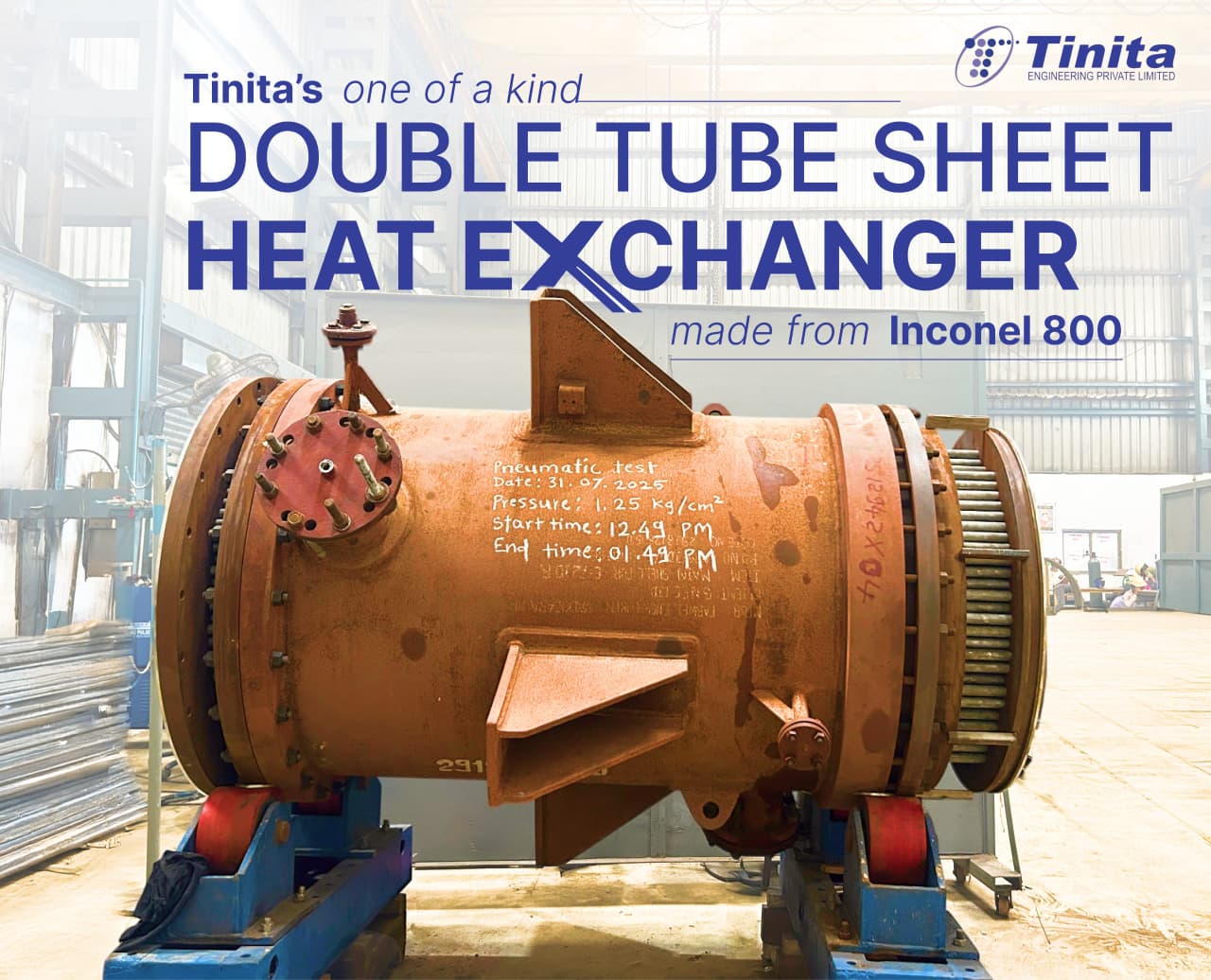
Toluene Diisocyanate (TDI) production requires specialised equipment that can withstand high temperatures, strong chemical reactions and highly corrosive process streams. The TAR concentrator unit is an essential element in this process, as it processes heavy residues under harsh conditions that can quickly damage standard equipment. An Inconel Double Tube Sheet Heat Exchanger is extensively used for safe and reliable performance, as it is resistant to oxidation, corrosion, and stress cracking at high temperatures. The double tube sheet design improves safety by providing an additional barrier to prevent leakage and cross-contamination of process fluids. Due to its longevity and reliability, this structure has become the preferred choice in challenging chemical processing environments, and Tinita Engineering offers such heat exchanger systems for high-performance applications.
What is a Double Tube Sheet Heat Exchanger?
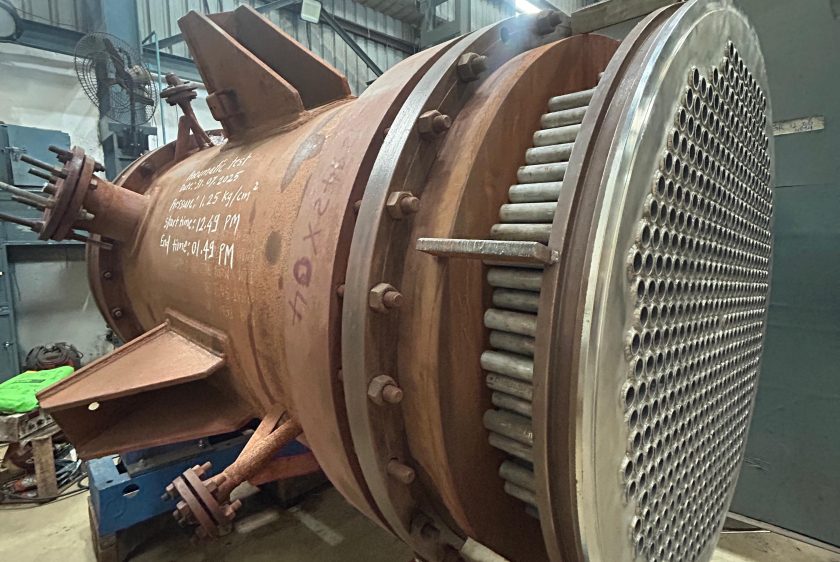
A double tube sheet heat exchanger uses two separate tube sheets instead of a single plate. Each tube sheet connects the tube bundle to the shell section. A small gap remains between the two sheets, forming a leak detection chamber. This chamber acts as a monitoring space for early leak detection. If a tube joint fails, the fluid enters the gap instead of mixing with the second fluid stream. This design prevents contamination between the heating medium and process fluid. The structure enhances safety in chemical industries where fluids must be isolated. Maintenance teams will identify and repair leaks before they cause damage. Double tube sheet construction is also suitable for systems that operate under high-pressure and temperature conditions.
Difference Between Double Tube Heat Exchanger and Conventional Designs
Standard shell-and-tube heat exchangers use a single tube sheet on each side. While cost-effective for low-risk applications, a single tube sheet offers no containment if a tube-to-tube sheet joint fails. In critical chemical processes, this risk is unacceptable. Below is a direct comparison:
| Feature | Double Tube Sheet Heat Exchanger | Conventional Shell and Tube Heat Exchanger |
| Tube Sheet Design | Two tube sheets with a leak detection gap | Single tube sheet |
| Fluid Isolation | Prevents mixing between process fluids | Higher risk of fluid mixing |
| Leak Detection | Early leak detection through monitoring space | The leak may remain unnoticed |
| Application Suitability | Hazardous chemical processing and toxic fluids | General heat transfer duties |
| Process Safety | High operational safety and containment | Standard safety level |
Double Shell and Tube Heat Exchanger Configuration
The double shell and tube heat exchanger configuration, specifically referring to the use of double tube sheets or double-tube (tube-in-tube) designs, represents a specialised engineering solution for high-stakes industrial thermal transfer. The design uses an inner shell that holds the tube bundle and an outer shell that forms a second barrier. The inner shell manages the main process fluid flow. The outer shell acts as a safety enclosure that captures leaks or pressure failures. This configuration supports plants where toxic or volatile fluids circulate under high pressure. Chemical plants often install this system when strict environmental and safety rules apply. TDI production units also use this design to handle aggressive process conditions. The double shell design works together with a double tube sheet to improve containment and reduce the risk of fluid escape during plant operation.
Why Double Tube Sheet Design in TDI Plant?
The TAR concentrator section in a TDI plant processes heavy residues produced during chemical reactions. These residues might contain dangerous and reactive chemicals. The design of the heat exchanger must prevent leaks and ensure safe heat transfer.
Preventing Cross-Contamination
A TDI plant heat exchanger often transfers heat using high-pressure steam or thermal oil. Mixing between the heating medium and the TAR stream can damage the process and create safety hazards. A double tube sheet heat exchanger forms two independent barriers between fluids. A leak detection gap sits between the tube sheets. Any leakage appears in this space before fluid mixing occurs. This structure protects product purity and plant equipment.
Operational Safety
TDI process streams may contain reactive intermediates and acidic residues. Temperature regulation must remain consistent during TAR concentration. The design of the double-tube heat exchanger ensures safe operation under these conditions. Early leak detection prevents sudden failures. Maintenance teams can diagnose the issue without stopping the entire plant.
Redundancy
The double tube sheet arrangement provides an extra physical barrier at each tube joint. A leak at the first tube sheet cannot reach the second fluid circuit. This layered structure limits damage if a joint weakens under pressure or heat. Such redundancy improves reliability in critical chemical processing systems.
Why Inconel for the TAR Concentrator?
The material selection is crucial for the efficient operation of a TDI plant heat exchanger. TAR streams may consist of chlorides, acidic compounds, and high temperatures. Standard stainless steel often suffers from corrosion under such conditions. Inconel offers better resistance and mechanical stability.
Corrosion Resistance
TAR residues may contain acidic compounds and chloride salts. These chemicals can cause pitting and stress corrosion cracking in common alloys. Inconel heat exchangers are resistant to these types of damaging mechanisms. The nickel-based structure creates a stable oxide layer to protect the metal surface. This feature contributes to structural integrity during extensive operation cycles.
Thermal Stability
TAR concentration requires high temperatures for proper separation of heavy residues. Inconel maintains mechanical strength even under high heat conditions. The alloy resists creep and distortion during extended service. Stable mechanical properties help maintain tube alignment and heat transfer efficiency.
Longevity
Regular equipment replacement increases operating downtime and maintenance costs. Inconel provides an extended lifespan in corrosive and elevated-temperature conditions. This durability diminishes repair intervals and the frequency of replacements. Reduced maintenance requirements contribute to a diminished total cost of ownership for the facility.
Design & Manufacturing Considerations
Design and manufacturing quality determine the long-term performance of a double tube sheet heat exchanger. Precision fabrication and proper standards ensure safe operation in chemical plants.
Precision Welding
Inconel tubes require careful welding to the tube sheets. Gas Tungsten Arc Welding (GTAW), often known as TIG welding, provides better control for this process. Accurate welding protects the joint from leaks and heat stress. Skilled welding ensures proper fusion of the tube and sheet surfaces.
Thermal Expansion
The shell and tube components expand at various rates during heating cycles. A double shell and tube heat exchanger must be able to accommodate this expansion without stressing the tube bundle. Design features such as expansion joints or floating heads help in this process. Proper control of expansion protects welds and keeps sealing surfaces tight.
Quality Standards
Heat exchanger manufacture must adhere to tight engineering specifications. ASME Section VIII Division 1 specifies requirements for pressure vessel design and construction. TEMA Class R regulations guide heat exchanger design for refineries and chemical applications. Compliance with these standards provides structural safety and process reliability.
Customisation
Each TAR concentrator system operates under specific thermal loads and space constraints. An experienced double tube sheet heat exchanger manufacturer designs the equipment that meets the specified heat temperature, pressure rating and plant structure. Good design enhances heat transfer and enables safe integration into the TDI process system. Tinita Engineering provides engineered heat exchangers designed for chemical processing applications.


 English