
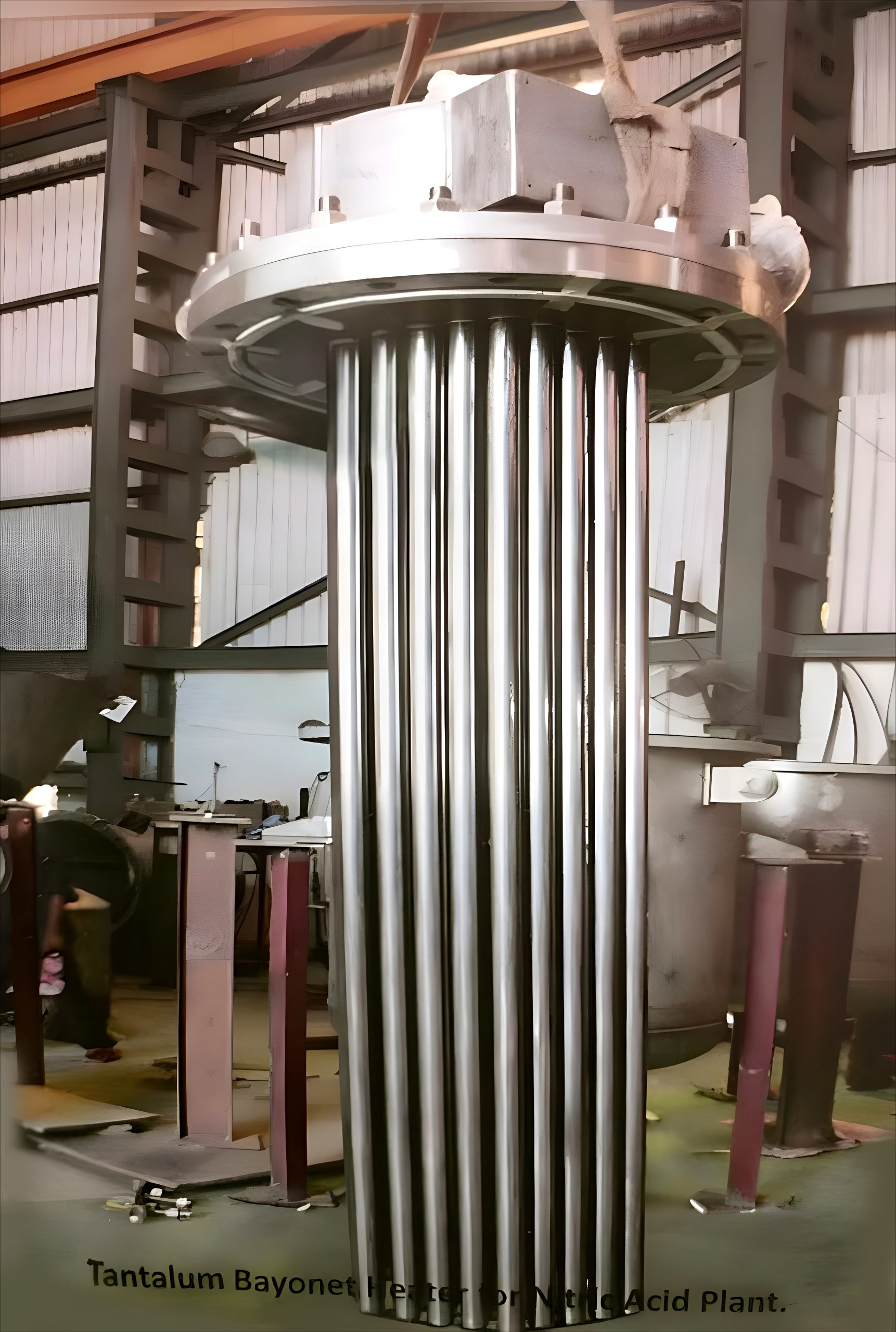
Nitric acid plants operate under highly corrosive conditions. Strong oxidising acids attack most common metals and reduce equipment life. The heating systems used in these plants must withstand high temperatures and severe chemical reactions without fail. Tantalum bayonet heaters for nitric acid plants provide a reliable heating solution for such demanding environments. Tantalum metal has excellent resistance to nitric acid, even at high concentrations and temperatures. Due to this property, many nitric acid facilities depend on tantalum-based heating equipment to maintain safe and stable operations. Tinita Engineering Pvt. Ltd. designs and manufactures advanced tantalum bayonet heaters that support consistent heat transfer and long service life in acid processing units.
This blog explains the heating needs of nitric acid plants and why many metals fail in such conditions. It also describes the design, working principle, and industrial use of tantalum bayonet heater systems.
What is a Tantalum Bayonet Heater, and How Does It Work?
A tantalum bayonet heater is a special heat transfer device used in highly corrosive chemical tanks. The heater operates with a tube-within-a-tube structure. Heating fluid, often steam or hot oil, flows through the inner tube. The heat then passes through the metal wall into the surrounding liquid inside the tank. Tantalum protects the heater surface from acid attack. This metal remains stable in strong nitric acid and maintains structural strength during long operation. The heater assembly usually includes heater tubes, a tubesheet liner, and an immersion structure connected to the tank. This design allows efficient heat transfer while keeping the heating medium separate from the process fluid.
Understanding the Design: The Bayonet Heat Exchanger
The bayonet heat exchanger uses a tube-within-a-tube arrangement. An inner tube carries the heating fluid while the outer tube remains in contact with the chemical liquid. Heat moves through the metal wall into the process fluid. This design allows each tube to expand freely when the temperature rises. Independent expansion prevents mechanical stress and lowers the risk of cracking or leakage. Maintenance becomes easier because the internal heating element can be removed without draining the tank. High heat transfer efficiency is another advantage. The long tube length increases the heating surface and improves temperature control in nitric acid processing systems.
Types of Tantalum Bayonet Heater Systems Used in Industry
Different plant layouts require different heater configurations. Several tantalum bayonet heater systems support safe heating in nitric acid operations.
Vertical Tantalum Bayonet Heater
A vertical tantalum bayonet heater is installed upright inside a processing tank. The heater tubes extend downward into the liquid while the inlet and outlet remain above the tank. This design reduces floor space and fits well in tall reactors or absorption units. Maintenance is simpler because the heater assembly can be lifted vertically during inspection.
The vertical design supports stable heat distribution across the tank height. Nitric acid plants often use this system, where large volumes require steady heating. The compact structure also improves plant layout efficiency and keeps service areas accessible.
Tantalum Bayonet Tank Immersion Heater
A tantalum bayonet tank immersion heater sits directly inside a chemical storage or process vessel. The heating tubes remain fully submerged in the liquid. Steam or hot oil flows through the inner tubes while heat transfers to the surrounding acid.
This system provides direct heating with minimal heat loss. It works well in acid storage tanks and chemical reactors where stable temperature control is required. Tantalum surfaces maintain corrosion resistance even in strong oxidising acids.
Tantalum Bayonet Heat Exchanger
A tantalum bayonet heat exchanger works on the same tube-within-a-tube concept but in a heat exchanger assembly. The process fluid surrounds the outer tube while the heating medium flows through the internal tube. This setup delivers efficient heat transfer even in aggressive acid environments. Compared with many corrosion-resistant alloys, tantalum shows better stability in nitric acid. Materials such as stainless steel or titanium may suffer corrosion under strong oxidising conditions. Tantalum maintains surface integrity and extends equipment life.
Tantalum Bayonet Tank Heater
A tantalum bayonet tank heater serves as a reliable heating system for nitric acid tanks and chemical reactors. The heater tubes extend into the tank while steam or thermal oil flows through the internal passage. Heat moves through the tantalum wall and warms the surrounding liquid. The bayonet design increases the heating surface without adding complex equipment inside the vessel. This structure supports stable heat transfer and reduces energy loss. Tantalum metal resists corrosion in strong oxidising acids, which helps maintain equipment strength for long periods. As a result, many chemical plants rely on tantalum bayonet tank heaters to improve plant reliability, reduce corrosion risk, and maintain safe process temperatures.
Critical Component Protection: Tantalum Bayonet Heater Tubesheet Lining
The tubesheet often becomes the weakest point in many heat exchanger systems. A chemical attack can damage this surface because it connects several tubes and seals the heating assembly. A tantalum bayonet heater tubesheet lining protects this area from nitric acid corrosion. The lining forms a strong barrier between the metal base and the process fluid. Precision welding and tight sealing ensure vacuum-tight joints across the tubesheet surface. This protection extends equipment life and reduces the risk of leakage. Working with an experienced tantalum bayonet heater tubesheet lining supplier ensures proper material handling, accurate fabrication, and reliable sealing performance in corrosive environments.
Integration: Tantalum Bayonet Tank Immersion Heater Systems
Tantalum bayonet tank immersion heaters are industrial heaters designed to perform in harsh chemical environments. They use tantalum’s strong corrosion resistance to last in conditions where other materials often fail. The heater has a tube‑inside‑a‑tube design: the outer tube touches the process fluid, while the inner tube carries the heating medium down to the bottom. The heated medium then flows back through the space between the tubes, allowing efficient and precise heat transfer.
Industrial Applications of Tantalum Bayonet Heaters
Tantalum bayonet heaters support several chemical processes where strong acids require controlled heating.
- Nitric Acid Plants
Nitric acid production requires stable heating in absorption towers and storage tanks. Tantalum bayonet heaters maintain temperature control without corrosion damage.
- Chemical Processing Plants
Many chemical reactions use oxidising acids or aggressive liquids. Tantalum heaters provide safe heat transfer and long equipment life in these systems.
- Fertilizer Manufacturing
Nitric acid plays a key role in fertiliser production. Bayonet heaters support acid concentration units and maintain steady thermal conditions during processing.
- Acid Storage and Heating Systems
Large acid storage tanks require heating during transfer or processing stages. Tantalum bayonet immersion heaters provide reliable temperature control while protecting the tank structure.
Choosing a Tantalum Bayonet Tank Heater Supplier
Choosing a reliable tantalum bayonet heat exchanger manufacturer requires careful technical examination. Material certification confirms that the tantalum used in heater tubes and liners meets the required purity and grade. Weld quality must comply with the stringent inspection criteria, as even minor flaws can cause leakage. The products are designed according to ASME standards, which ensure structural safety and reliable performance. As a global exporter of tantalum bayonet heaters, it is also important to ensure that this delicate equipment is safely packed and transported.Tinita Engineering Pvt. Ltd. provides advanced engineering support, precise fabrication, and reliable delivery of tantalum heating systems for nitric acid plants and other chemical processing facilities.


 English