

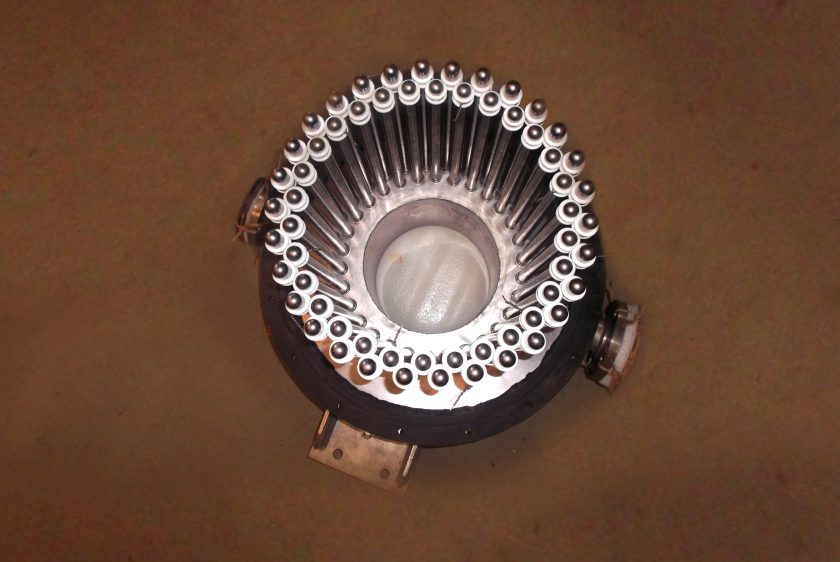
Tantalum bayonet heat exchangers are designed for sulphuric acid plants where heat and corrosion operate together. These units transfer heat through a sealed bayonet tube design, keeping process fluids contained and stable. In acid plants, high temperatures and strong acids can damage most metals and reduce plant uptime. Tantalum resists acid attack and holds strength, which makes it suitable for heaters, reboilers, and evaporators in concentration units. The system supports steady heat transfer in harsh conditions and helps maintain process control during heating, dilution, and concentration stages. Demand for reliable equipment keeps rising, and a specialised tantalum bayonet heater exporter, Tinita Engineering Pvt. Ltd., supports global supply with proven solutions.
Why Tantalum? Material Properties for Acid Service
Tantalum stands out in sulphuric acid service due to its strong corrosion resistance. It remains almost inert in sulphuric acid below 300°F and performs reliably up to about 500°F. This stability makes it suitable for both moderate- and high-temperature operations. Compared to graphite, glass, and stainless steel, tantalum offers better resistance to oxidising environments. Graphite can fail under mechanical stress, while glass linings may crack. Stainless steel, in many cases, cannot resist strong acid attacks. Tantalum avoids these issues. It also has good thermal conductivity, around 54 W/m·K, which supports efficient heat transfer. Its ductility allows it to be formed into thin, strong tubes without cracking. This combination of strength and heat flow makes tantalum a preferred material for acid heaters and exchangers.
Design Deep Dive: The Bayonet Heat Exchanger Configuration
A bayonet heat exchanger has a double-pipe design. It has both an inner and outer tube. Steam enters the inner tube and flows to the unit’s end. It then flows as condensate to the outer tube. This closed-loop design enables heat transfer without direct mixing.
The process fluid surrounds the outer surface of the exchanger. Heat passes through the tube wall into the acid. This setup supports safe operation in corrosive systems and reduces the risk of leakage between fluids.
Advantages in sulphuric acid service:
The bayonet design offers clear benefits in harsh acid conditions. It suits both new installations and retrofit projects.
- Elimination of expansion stresses
Thermal expansion occurs during heating cycles. The bayonet design allows internal movement of tubes. This reduces stress on joints and welds. It lowers the risk of fatigue failure over long service periods.
- Single-end connection simplifies installation.
All connections are located at one end of the exchanger. This design reduces piping complexity. It also allows easy installation in tanks and vessels. Maintenance access becomes simpler, which saves downtime.
- Ideal for immersion applications where space is constrained
Many acid tanks have limited space. The bayonet exchanger fits well in such layouts. It can be inserted directly into vessels without large structural changes. This makes it suitable for compact plant designs.
Immersion Heating Solutions for Storage and Processing
The tantalum bayonet tank immersion heater is widely used in acid storage and batch processing tanks. It helps maintain stable temperatures during holding and transfer stages. Temperature control is critical to avoid crystallisation and maintain product quality. These heaters perform well even in the presence of fluid movement and turbulence. Their structure remains stable during operation, even in large tanks equipped with mixing systems. Tantalum offers long-lasting protection against corrosion. The heater is designed to spread heat evenly throughout the tank, helping to prevent hot spots and uneven heating. In many plants, these systems run continuously and require very little maintenance. Their robust construction gives them a long service life and keeps them operating reliably, even in harsh acidic conditions.
Key Components of Tantalum Bayonet Heat Exchangers
The tube sheet in a bayonet heater is a high-stress section that holds and connects the tubes to the shell, while being constantly exposed to heat, liquid acids, and corrosive vapours. To protect it, a tantalum bayonet heater tube sheet liner is used as a barrier over the base metal, which is often carbon steel. Tantalum offers strong resistance to acid attack, which helps prevent corrosion, leakage, and damage at the tube-to-header interface. This lining also reduces the risk of galvanic corrosion by separating dissimilar metals. Depending on service conditions, the liner may be applied using explosion cladding for a strong bond or as a loose lining to allow thermal movement. Its good thermal conductivity supports steady heat transfer, while proper fabrication and welding ensure durability, prevent delamination, and maintain safe operation in demanding chemical environments.
Applications in concentration and reheating
These systems are used in acid concentration units and reheaters. They handle high temperatures and corrosive media with reliability.
Sourcing and Supply Chain: Selecting a Tantalum Bayonet Heater Tubesheet Lining Supplier. Selecting the right supplier is critical for long-term performance. Equipment must adhere to strict design and safety regulations. Buyers should seek ASME certification and U-Stamp permission. Experience with TEMA standards is also essential. These ensure proper design and fabrication practices. Weld quality is crucial in preventing leaks and contamination. Seamless construction reduces weak points in the system. A trusted tantalum bayonet heater tubesheet lining supplier will have proven expertise in refractory metals. Tinita provides capabilities in explosive cladding, precision welding, and custom fabrication. Their systems are built to handle aggressive acid service with high reliability. Strong supply chain support also ensures timely delivery and consistent quality.
Customisation and Configuration: The Vertical Tantalum Bayonet Heater
The vertical tantalum bayonet heater is suitable for applications that require precise control over space and flow. It is often used in sulphuric and nitric acid concentration columns. The vertical layout saves floor space and allows for more fluid movement. It also performs well with natural circulation evaporators and reboilers. These systems require steady heat input and smooth flow patterns. Customisation is vital in these applications. Tinita modifies heater length, diameter, and flange design to meet plant specifications. This ensures easy integration with existing nozzles and vessels. The final result is a compact, effective heating solution designed for demanding chemical applications. Choose Tinita Engineering Pvt. Ltd for the Tantalum bayonet, as we are a trusted manufacturer and supplier of this product, known for quality and reliability.


 English