
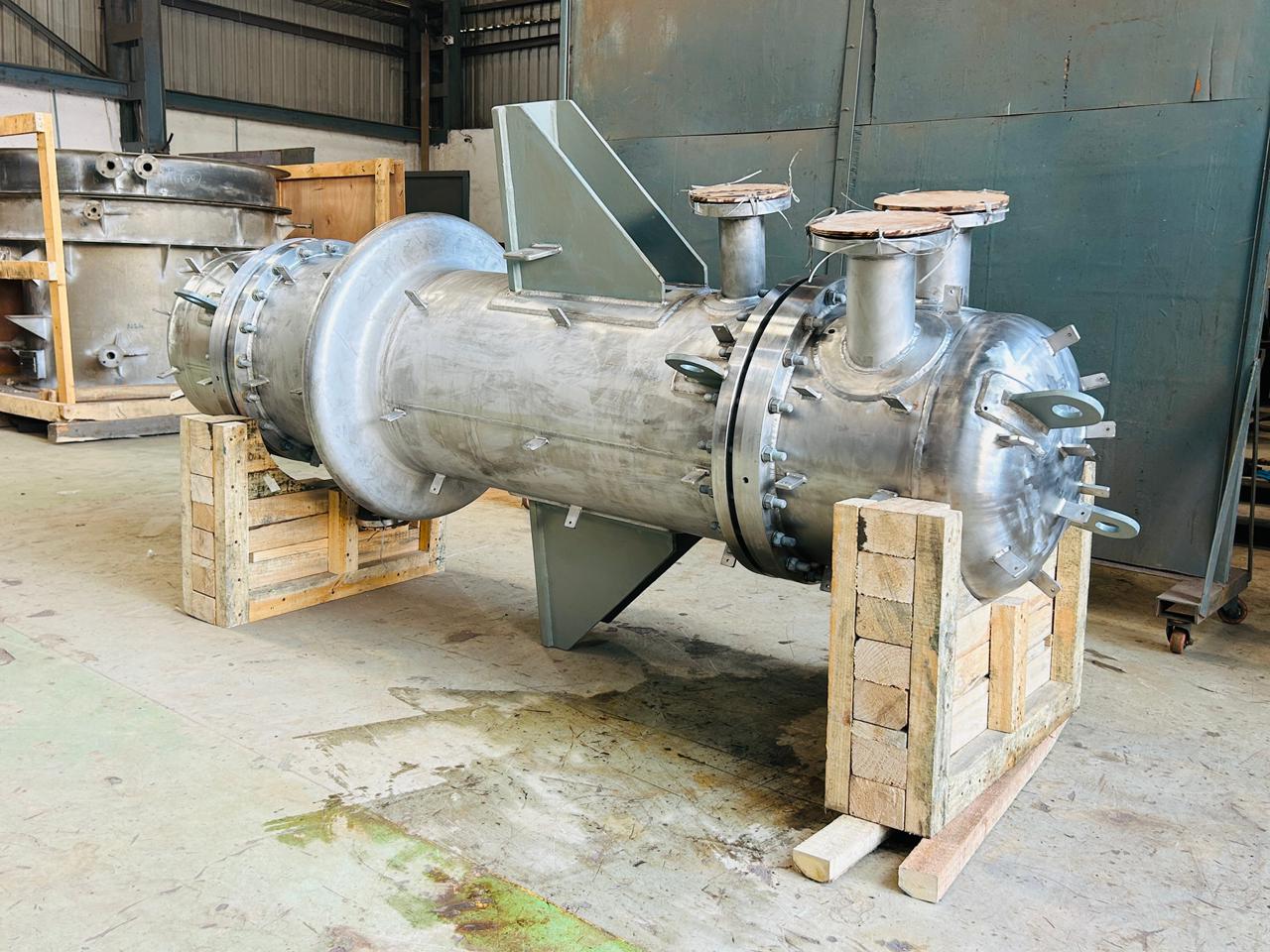
One of the most corrosive chemical environments has a 30 KTPA Chloro Toluenes (CTS) plant. The process includes chlorination at high temperatures and constant exposure to wet chlorine, hydrochloric acid, and reactive organic chlorides. These conditions put a lot of strain on equipment that moves heat. Chlorides can cause pitting, crevice attack, and stress corrosion cracking, which can cause standard stainless steels to break down early.
This is where a Hastelloy heat exchanger for CTS plant operations becomes critical. Nickel-based Hastelloy alloys are built to handle harsh chlorinated media without loss of strength or surface integrity. For a heat exchanger for chloro toluenes plant, Hastelloy grades such as C-276 and C-22 provide stable performance, longer service life and safer plant operation. For producers of benzyl chloride, benzal chloride and benzotrichloride a corrosion-resistant heat exchanger for chlorinated chemicals is not optional—it is essential. Tinita is a leading Hastelloy heat exchangers manufacturer. We offer high-quality products that are perfect for these kinds of corrosive situations.
Material of Heat Exchanger
Choosing the right alloy is important in CTS heat exchanger design. The material must resist both uniform corrosion and localised attack while maintaining strength at high temperature. Hastelloy alloys meet these needs better than other commercial options and are widely seen as the best material for CTS heat exchanger applications.
Hastelloy C-276
A Hastelloy C276 heat exchanger is resistant to wet chlorine, hydrochloric acid, and chlorinated organics. It has a lot of molybdenum and chromium in it, which keeps it from pitting and cracking under stress. At CTS plants, where the acid concentration can change, C-276 works well in reboilers, condensers, and hot process loops. When businesses think there will be process problems or trace contaminants, they often choose it.
Hastelloy C-22
A Hastelloy C-22 heat exchanger provides even broader corrosion resistance. It handles oxidizing and reducing media at the same time, which is common in chlorination reactions. C-22 shows strong resistance to crevice corrosion and is preferred in critical reactor cooling and vapour condensation zones. For long campaigns and minimal shutdowns, C-22 is a proven heat exchanger material for chlorinated chemicals.
Technical Specifications for a 30 KTPA CTS Plant
Heat exchangers in a CTS unit must be designed with care. Mechanical strength, corrosion margin and code compliance all matter. Below are the typical design parameters used by an experienced chemical plant heat exchanger manufacturer for a 30 KTPA capacity.
- Heat Exchanger Type
Shell and tube heat exchangers are the most common choice, built to TEMA Class R or C standards for severe service. These designs allow easy inspection and tube replacement. In some clean service areas, a plate heat exchanger with Hastelloy plates may be used to save space while maintaining corrosion resistance. - Design Pressure
CTS process loops usually require a design pressure between 10 and 25 bar. The exact value depends on the chlorination stage and downstream separation units. Hastelloy maintains its strength across this pressure range without risk of cracking. - Design Temperature
During the chlorination process, the heat goes up, and the temperature reaches 200°C to 300°C. The Hastelloy stays unreactive to this thermal expansion. - Surface Area
For a 30 KTPA plant, individual exchangers typically fall between 50 m² and 150 m². The final surface area depends on heat duty, flow rate, and allowable pressure drop. Hastelloy allows compact designs without reducing life. - Tube Dimensions
Standard tube sizes include 19.05 mm (3/4″) or 25.4 mm (1″) outer diameter. Wall thickness is usually 1.6 mm to 2.1 mm, matching BWG 16 or 14. These sizes provide a balance between heat transfer and corrosion allowance. - Design Codes
Equipment is normally designed to ASME Section VIII Division 1, along with TEMA standards. For export projects, PED compliance may also apply. A qualified Hastelloy heat exchanger manufacturer ensures full code traceability. - Tube Thickness
Tube thickness is selected as per TEMA and ASME rules, with added corrosion margin based on process data. This approach prevents early leaks and unplanned shutdowns.
Applications in CTS Production
A Hastelloy heat exchanger application covers several critical stages in chloro toluene manufacturing. Each area demands stable heat transfer under corrosive load.
- Reboilers and Process Heat Exchangers
These units handle liquid streams rich in hydrochloric acid and chlorinated compounds. Hastelloy resists acid attack and prevents tube thinning over time. - Condensation of Vapors
Hot vapors containing chlorine and organic chlorides are highly aggressive during condensation. A heat exchanger for chlorinated chemical plants built in Hastelloy avoids pitting and leakage at the dew point. - Reactor Cooling
The reaction between toluene and chlorine is strongly exothermic. Reliable cooling is vital for product quality and safety. Hastelloy ensures fast heat removal without corrosion risk.
Why Choose Tinita for CTS Projects
Tinita is a trusted Hastelloy heat exchanger supplier with strong experience in chlorinated chemical service. We understand the failure modes common in CTS plants and design equipment to avoid them.
Our corrosion expertise allows us to recommend the right alloy C-276 or C-22 based on actual process data, not guesswork. Each Hastelloy heat exchanger for CTS plant use is engineered with proper corrosion allowance, welding control, and inspection.
We also support cost-effective logistics. From raw material sourcing to final delivery, we manage timelines and documentation to match project schedules. For EPC contractors and plant owners, this means fewer delays and smoother commissioning.
When reliability matters and corrosion risk is high, Tinita delivers heat exchangers that perform as expected, year after year.


 English