

Caustic soda also known as sodium hydroxide, is an important chemical used in many industries around the world, including textiles, paper, and water treatment. The chlor-alkali process is used to manufacture it. In this process, brine (salt water) is broken down into chlorine, hydrogen, and caustic soda. Anolyte Tank plays a very important role in this process as it is capable of withstanding chlorine, rich solutions that come from the anode side of the electrolyzer. In fact, such tanks are a staple of modern Caustic Plants. Because this environment is highly corrosive, material selection is crucial. Titanium Grade 2 (UNS R50400) compliant with ASME and ASTM standards for corrosion-resistant industrial equipment, is the preferred choice for these tanks due to its exceptional strength, corrosion resistance and durability. The Titanium Grade 2 tank is an important part of reliable and safe caustic soda manufacturing equipment in modern caustic soda plants.
What is an Anolyte Tank and Its Role in the Chlor-Alkali Process
An anolyte tank is a container that collects and transfers the chlorine-rich brine made by the electrolyzer. It connects the anode compartment to the rest of the chlor-alkali process equipment which maintains stability and flow all the time. The tank has to deal with harsh conditions like high temperatures, chlorine gas and concentrated sodium hydroxide. Only corrosion-proof materials can withstand these stresses. Choosing a strong titanium process equipment design ensures efficiency, safety and durability in tough conditions.
Challenges with Conventional Anolyte Tank Materials
Under the conditions of a chlor-alkali plant regular materials often don’t perform. Common options like carbon steel, FRP or rubber-lined steel tanks have many challenges.
- Corrosion damage: Chlorine and caustic solutions cause severe pitting and rust in carbon steel chemical process tanks.
- Scaling and contamination: FRP anolyte tanks suffer from scaling and chemical buildup, contaminating the product.
- Frequent maintenance: Rubber-lined tanks degrade quickly, causing frequent shutdowns and caustic soda plant maintenance costs.
- Leakage and safety risks: Cracks or leaks in these materials can lead to dangerous chemical spills and industrial tank corrosion problems.
Why Titanium Grade 2 is the Ideal Material for Anolyte Tanks
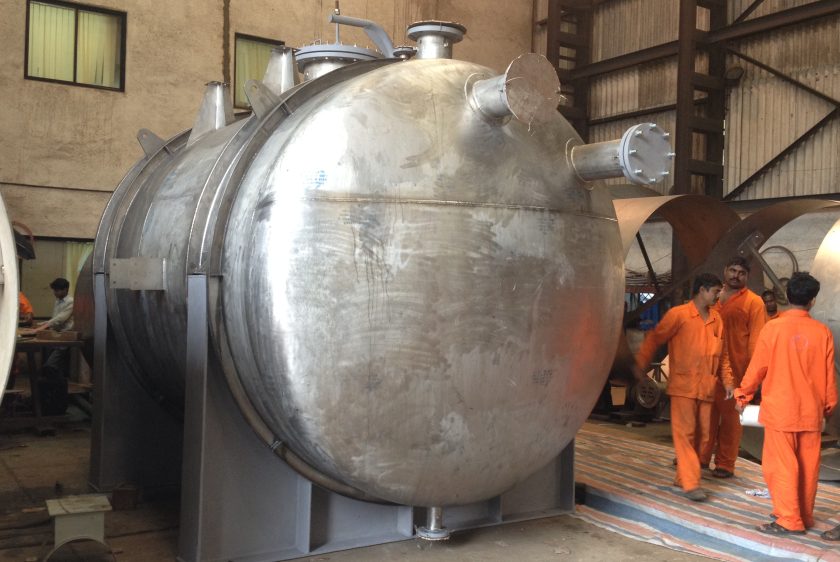
Titanium Grade 2 solves all these problems and offers durability in titanium chemical process equipment:
- Superior corrosion resistance: It withstands chlorine, caustic soda, and salt without degradation. This makes it ideal for titanium corrosion resistance applications.
- High strength-to-weight ratio: Titanium provides strong performance while staying lightweight, reducing stress on tank supports.
- Thermal stability: Handles temperature fluctuations without warping or cracking.
- Stress-crack resistance: Safe and reliable operation even under pressure and chemical exposure.
- Material comparison: Titanium Gr.2 outperforms SS316L, FRP, and rubber-lined steel in longevity and performance.
- Low lifecycle cost: Minimal maintenance means lower operating expenses for the titanium pressure vessels owners.
Design and Fabrication of Titanium Gr.2 Anolyte Tanks
The design of each titanium anolyte tank follows strict international standards like ASME Section VIII and ASTM B265. To ensure that the joints are leak-proof titanium tank fabrication uses precise methods like GTAW (TIG) welding. You can customize the capacity, wall thickness, pressure ratings and fittings to fit the needs of your caustic plant. Every tank undergoes hydro and radiographic testing to confirm quality. These tanks are made to last in environments with excessive chlorine and corrosive chemicals which makes them the preferred choice for Caustic Soda storage tanks, ASME tank manufacturers and titanium chemical storage tanks. It can also be used with equipment such as the titanium shell and tube heat exchanger which plays an important role in maintaining process temperature and efficiency.
Applications in Caustic Soda and Chlor-Alkali Plants
Titanium process equipment manufacturers supply these tanks for many uses within chlor-alkali plant equipment systems:
- Electrolyzer circulation: For both anolyte and catholyte loops, ensuring stable electrolysis.
- Chlorine absorption units: Safely handle chlorine-laden liquids and gases.
- Brine preparation systems: Manage high-purity brine without corrosion.
- Caustic soda recovery: Used in recovery and purification units for process efficiency.
- Other uses: Found in sodium hypochlorite production, water treatment, and desalination as reliable titanium brine tanks.
Key Benefits of Titanium Grade 2 Anolyte Tanks
The benefits of a titanium anolyte tank go beyond being resistant to corrosion. They add value to operations over the long term:
- Unmatched corrosion resistance: Withstands chlorine and caustic soda without damage.
- Extended service life: Operates for decades with little maintenance.
- Lightweight and strong: Easier installation and reduced structural load.
- Improved safety: Leak-proof design prevents chemical exposure and accidents.
- High purity: Keeps products clean and uncontaminated.
- Eco-friendly: Longer lifespan means fewer replacements and less waste in caustic soda plant safety systems.
Conclusion
Titanium Grade 2 Anolyte Tanks are very important in caustic soda and chlor-alkali plants because they are strong, safe and reliable. It reduces downtime, maintenance and makes sure that production quality stays the same. If you need high-performance, custom-made Titanium Grade 2 tanks for caustic soda plants, get in touch with Tinita Engineering Private Limited. As a trusted manufacturer of titanium heat exchangers, pressure vessels, and advanced process equipment, we deliver engineered solutions backed by strong fabrication capabilities and decades of industry experience.


 English